The Omnichannel Expansion Blueprint:

Structuring Off-Platform Rental Workflows

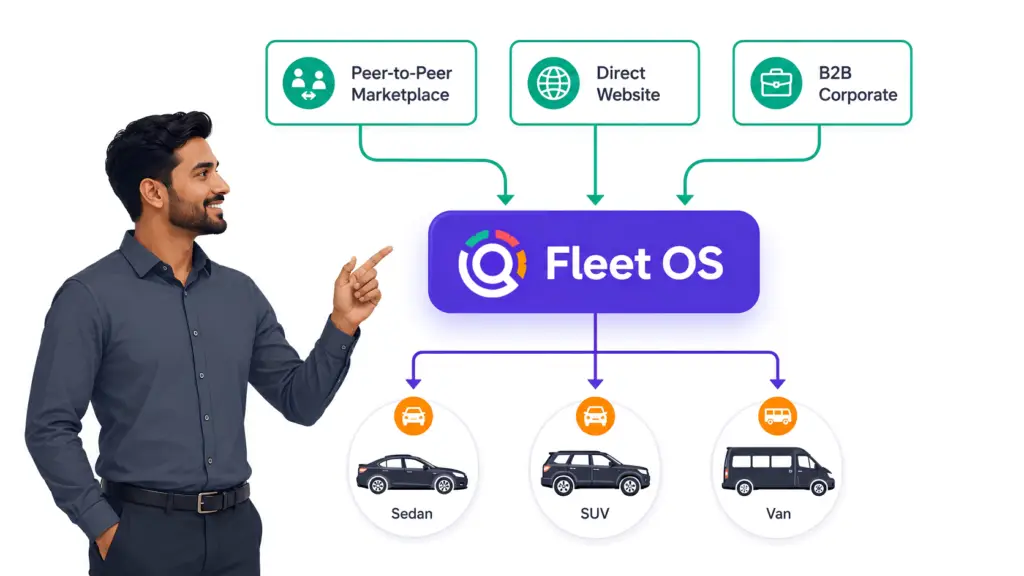
An Image showcasing Multiple channels for fleet operators to scale and expand their business

There is a terrifying realization that strikes every successful peer-to-peer car-sharing operator as they scale past ten vehicles. You log into your dashboard, review a month where you grossed $25,000, and suddenly understand a hard business truth:

You do not own a rental car company. You operate a highly-leveraged asset management job for a tech platform.

When 100% of your revenue, customer data, and lead generation is bound to a single peer-to-peer marketplace, you are captured in the Platform Trap. You are subject to algorithmic subjugation. If the platform updates its search algorithm, your utilization can drop 40% overnight. If a guest files a retaliatory false claim, your account can be suspended indefinitely, reducing your cash flow to zero while your commercial loan payments remain due.

Furthermore, the platform extracts a marketplace tax—typically between 10% and 40% of your gross top-line revenue—in exchange for lead generation and baseline insurance.

Transitioning from a platform-dependent host to an independent, enterprise-grade rental agency requires executing an Omnichannel Expansion Blueprint. You must treat the primary marketplace as just one distribution channel at the top of your funnel, while building the technical and operational infrastructure to process direct-to-consumer (D2C), B2B, and insurance-replacement bookings.

However, expanding off-platform without the correct API infrastructure will inevitably cause your operations to collapse under the weight of inventory collisions. Here is the exact blueprint for structuring your off-platform workflow safely.

Phase 1: The Mathematics of Margin Recapture

To justify the effort of building off-platform infrastructure, operators must understand the mathematics of Margin Recapture.

When a guest books a vehicle on a marketplace for $100 a day, the platform retains an average of $25 (assuming a standard 75/25 split). The operator receives $75. However, the fixed overhead costs (depreciation, loan service, parking, detailing, telematics) remain static regardless of the platform split.

If your daily fixed overhead per asset is $40:

  • Marketplace Booking: $75 (Payout) – $40 (Overhead) = $35 Net Profit per day.
  • Direct Booking: $100 (Direct Payment) – $40 (Overhead) – $15 (Commercial Insurance Overlay per day) = $45 Net Profit per day.


By capturing the booking directly, the operator increases net profit by nearly 30% per trip, while simultaneously acquiring the guest’s first-party data (email, phone number) for zero-cost future remarketing. When extrapolated across a 15-car fleet operating at 75% utilization over 12 months, omnichannel distribution is the difference between a high-stress hustle and a multi-million-dollar equity valuation.

Phase 2: The Inventory Collision Paradox

The primary reason operators hesitate to launch direct booking channels is the fear of Inventory Collision (double-bookings).

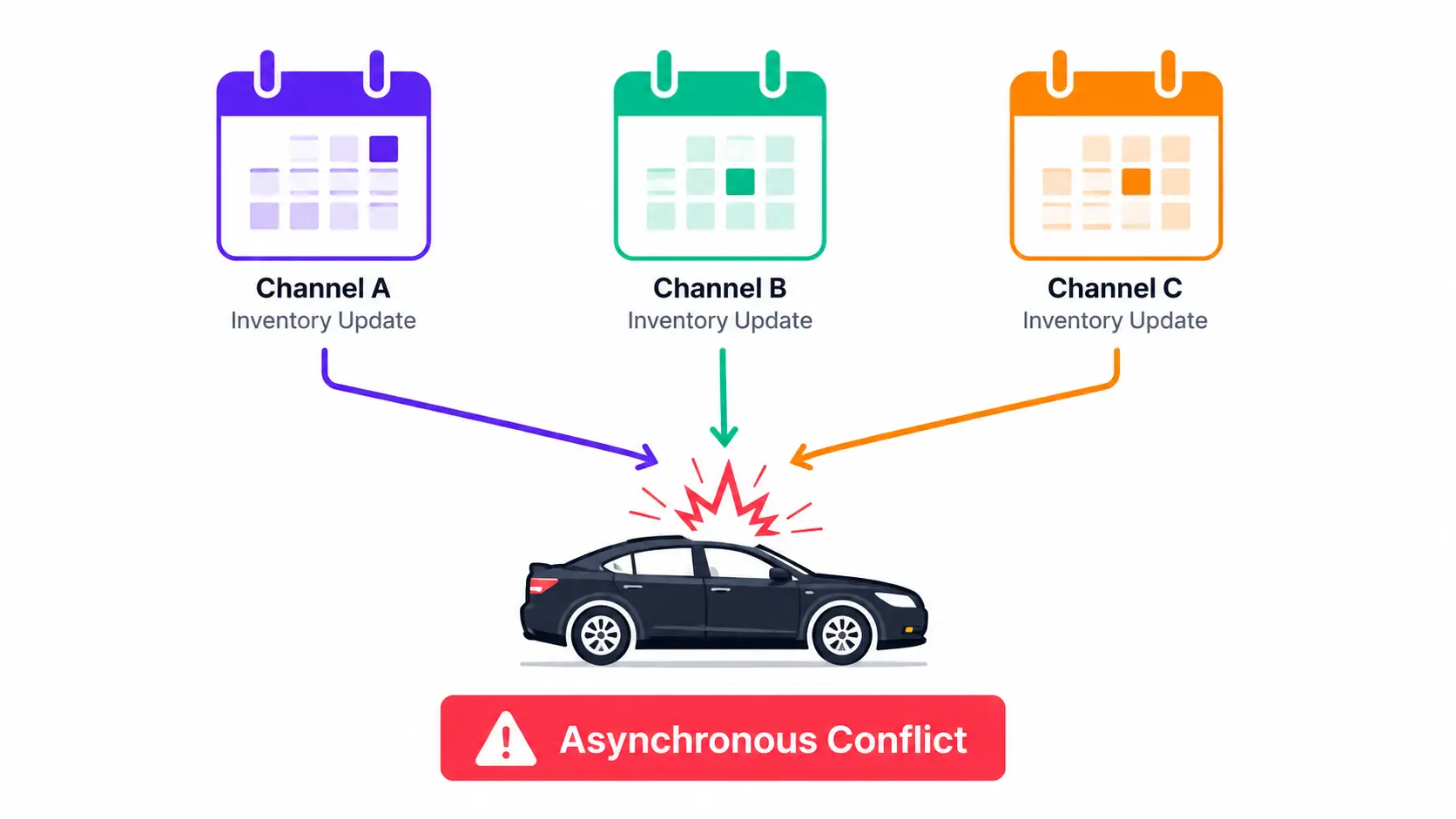
If Car #4 is listed on Turo, listed on your private website, and offered to a local hotel concierge, you are managing three separate, asynchronous calendars. If a direct booking comes in at 2:00 PM, and you manually log in to block off the Turo calendar at 2:15 PM, you have a 15-minute exposure window. In high-demand markets, a marketplace user can book that same car at 2:05 PM.

You are now facing a catastrophic operational failure. You must cancel on the marketplace (triggering severe algorithm penalties and fines) or cancel on your private client (destroying your direct brand reputation).

To solve this, manual synchronization must be eradicated. You cannot rely on human intervention to manage multi-channel availability.

Image showcasing the Inventory Collision Paradox for Rental fleet operators and Turo Hosts

Phase 3: Architecting the Omnichannel Tech Stack

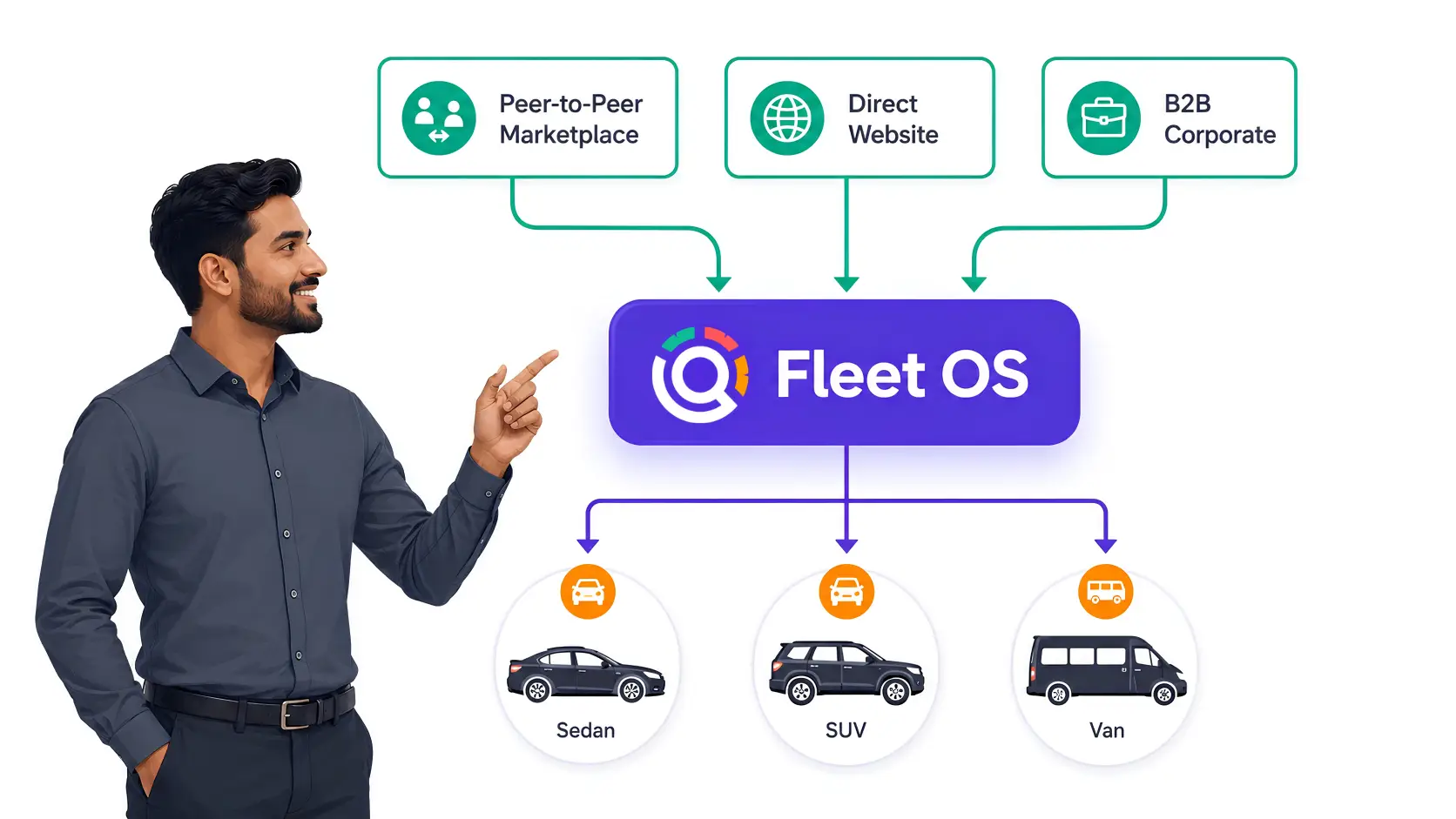
To safely operate across multiple booking channels, you must implement a Platform-Agnostic Operating System. This system sits in the center of your operations and acts as the ultimate source of truth, dictating availability across all storefronts.

An enterprise omnichannel tech stack consists of three rigid layers:

Layer 1: The Unified Master Calendar (API Synchronization)

Your Fleet OS must support two-way API communication or near-instant iCal synchronization.

  • When a direct booking is processed on your website, the OS instantly pushes a block to your marketplace calendar.
  • When a marketplace booking is confirmed, the OS instantly removes the vehicle’s availability from your private booking engine.
  • The human operator is completely removed from the data-entry loop, shrinking the double-booking exposure window from hours to milliseconds.
 

Layer 2: The Trust & Verification Protocol

On a peer-to-peer marketplace, the platform handles background checks, identity verification, and payment fraud mitigation. When you go direct, that liability falls entirely on you. You cannot accept a cash payment and a handshake. Your off-platform infrastructure must integrate automated verification software. Before a direct guest is authorized, the system must securely capture their driver’s license, run a real-time facial recognition match against a selfie, and execute a soft background check for severe driving infractions.

Layer 3: Hardware-Agnostic Access Relays

If a car is booked on Turo, the guest might use the Turo app. If booked directly, they cannot. Therefore, your hardware access layer must be decoupled from the booking source. By utilizing independent remote access relays wired into the vehicle’s CAN bus, your Fleet OS generates a secure, web-based digital access token. Whether the guest came from a marketplace, a private corporate contract, or an insurance replacement claim, they receive a universal, time-bound link via SMS to unlock the vehicle. The physical handoff procedure remains standardized, regardless of the revenue channel.

Phase 4: Channel Stratification Strategy

With the API and hardware infrastructure securely in place, the operator must actively route vehicles into the correct distribution channels. This is called Channel Stratification. You do not simply list every car everywhere. You deploy specific assets to specific channels based on yield and risk parameters.

1. Direct-to-Consumer (D2C) VIP Networks

  • The Strategy: Transitioning proven, high-quality marketplace renters into private clients.
  • The Workflow: When an exceptional guest completes a marketplace trip without damage or late returns, your automated system sends a post-trip sequence offering a 15% discount if they book their next trip directly through your private portal. You offer them a lower rate, but because you recapture the 30% marketplace tax, your net margin actually increases.
 

2. B2B Corporate and Film Production

  • The Strategy: High-margin, low-mileage rentals. Production companies and corporate travel coordinators require spotless, reliable vehicles, usually premium SUVs or luxury sedans.
  • The Workflow: These bookings are executed via direct invoicing. The vehicles are typically locked to your private OS calendar and completely removed from the peer-to-peer marketplace to ensure zero risk of cancellation or algorithm interference.
 

3. Insurance Replacement Rentals


  • The Strategy: Long-term, ultra-stable utilization. When a local driver’s car is rear-ended, their insurance company authorizes a 30-day rental.
  • The Workflow: You establish direct vendor relationships with local collision centers. You provide economy sedans (e.g., Honda Civics, Toyota Corollas). These vehicles are placed on your private calendar, blocking them out for weeks at a time. The turnover friction drops to zero, and the revenue is guaranteed directly by major insurance underwriters.

The Ultimate Defense: Owning Your Operating Layer

The operators who survive the next decade of the car-sharing industry will not be those with the nicest cars or the lowest daily rates. The winners will be the operators who own their customer data and control their distribution channels.

If you rely on a marketplace app to track your cars, message your guests, and record your maintenance, the marketplace owns your business.

To break free, you must extract your operational data from the marketplace ecosystem. You must utilize a neutral, third-party Fleet OS that sits above the marketplace. By centralizing your live telemetry, your digital remote access relays, and your master calendars into a single command node, you insulate your fleet from platform risk.

If a marketplace suspends your account tomorrow, an amateur loses their business. An omnichannel operator simply shifts their inventory to their private API and continues executing turnarounds without missing a beat.


Build your own infrastructure. Control your own distribution. Elevate your operation from a platform dependency to an independent commercial enterprise.

Frequently Asked Questions

The Platform Trap is a state of operational vulnerability where 100% of an operator’s revenue, lead generation, and customer data is bound to a single marketplace (like Turo). This leaves the business highly exposed to algorithmic changes, sudden account suspensions, and high revenue commission taxes.
You must utilize a Fleet Operating System that features two-way API calendar synchronization or near-instant iCal connectivity. When a vehicle is booked on one channel, the OS instantly pushes a blocking command to all other channels, shrinking the collision window to milliseconds and eliminating manual data entry.

Because you cannot rely on the marketplace to screen guests, you must integrate third-party biometric identity verification into your booking flow. The software captures the guest’s physical driver’s license, runs a real-time facial recognition scan against a live selfie, and performs a soft background check before authorizing the rental contract.

Margin Recapture is the financial process of retaining the 10% to 40% commission fee that peer-to-peer marketplaces typically deduct from a host’s gross revenue. By processing a booking directly, the operator keeps 100% of the revenue, drastically improving the net profitability of the vehicle.

You must install hardware-agnostic remote access relays (connected to the CAN bus). Your centralized Fleet Qarhami OS is the only OS that generates a secure, time-bound web link sent directly to the private guest’s smartphone via SMS. The guest taps the link to unlock the vehicle, completely bypassing the need for a marketplace application or physical keys.

© 2026 Qarhami. All Rights Reserved.