The 2026 Fleet Operator Checklist:
Building Infrastructure Before Inventory

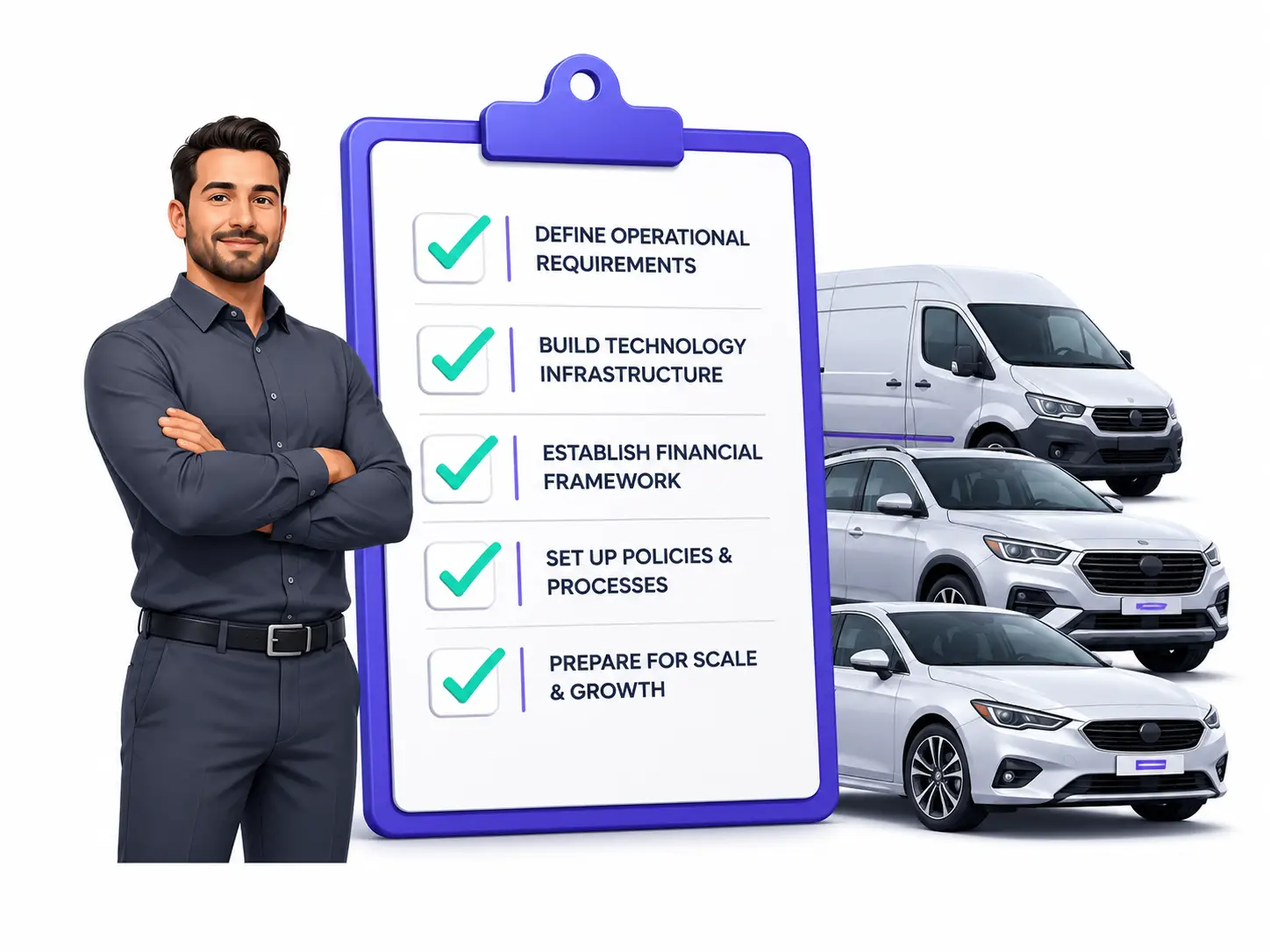
Fleet operator reviewing a digital checklist for building rental fleet infrastructure before acquiring new inventory.

Most aspiring Turo hosts make the same fatal error: they treat their fleet like a personal car collection. They buy the vehicle first, then worry about the “admin” later.

They pick a car based on what they like to drive, list it on the marketplace, and wait for the chaos to begin. They assume that if they have a vehicle and a calendar, they have a business.

In 2026, that is not a business; that is a high-maintenance chore.

Serious fleet operators do not buy inventory until they have built the operational infrastructure to support it. They treat every vehicle as a high-velocity capital asset that requires systemic governance. Before they ever put a key in a car or a listing on a platform, they ensure their fleet stack is built to handle the complexities of multi-vehicle logistics.

If you want to scale a rental fleet without hitting the 3-Car Growth Wall, you must build the foundation before you deploy the capital. Here is your 2026 Fleet Operator Checklist.

The Fleet Infrastructure Mandate

Infrastructure is the silent machinery that allows you to manage ten cars with the same focus you applied to one. Without
it, you are not scaling; you are just spreading your lack of control across more assets.
 

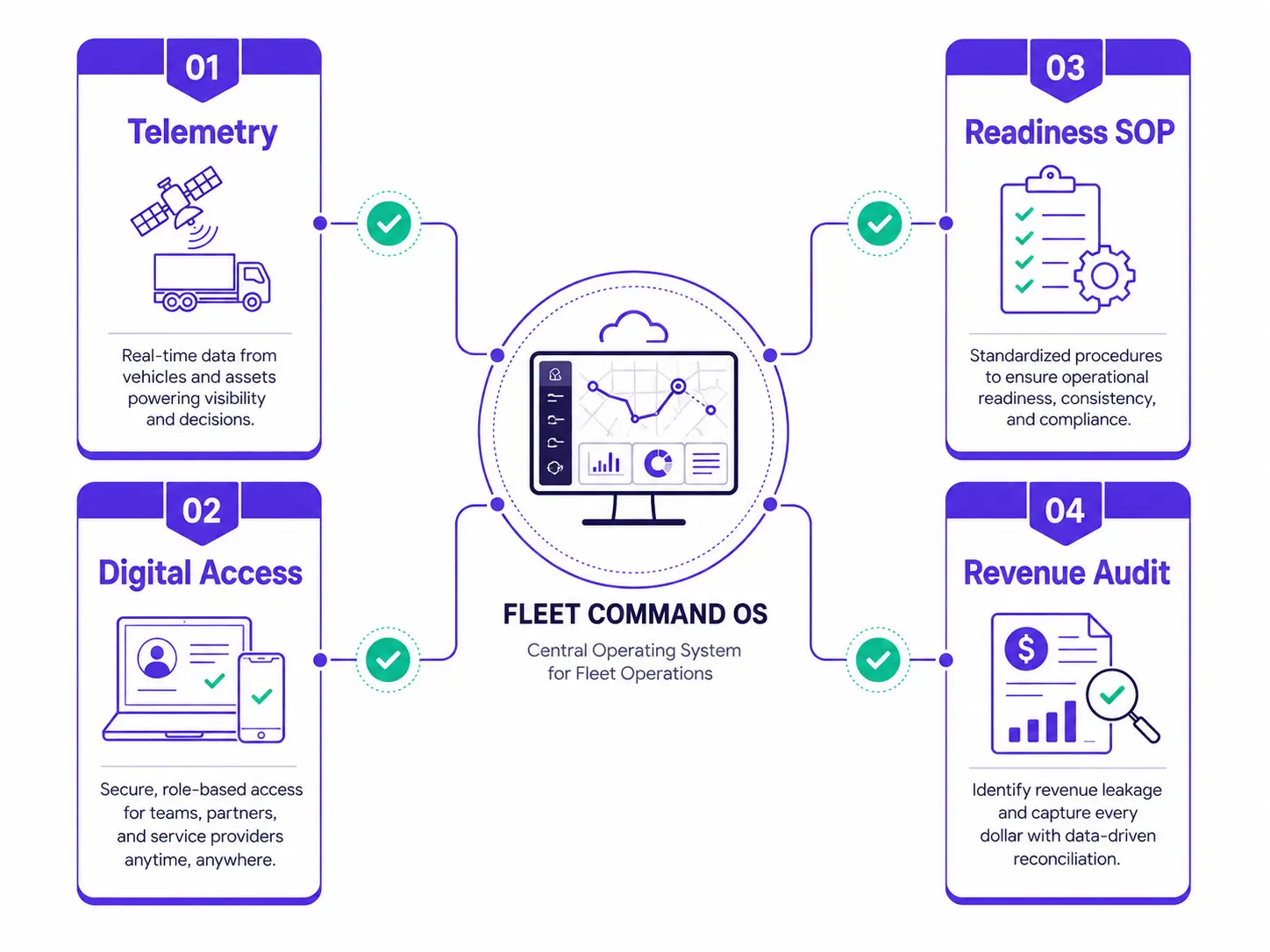
True infrastructure covers the four pillars of asset governance: Visibility, Access, Readiness, and Financial Auditing.
If your setup does not explicitly address these four layers, you are operating on hope and hope is not a business strategy.

Pillar 1: The Telemetry Layer (Hardware Integration)

You cannot manage what you cannot see in real-time. Passive GPS pings are insufficient for commercial fleets. You require an OBD-II hardware integration that converts the vehicle’s computer data into operational intelligence.


  • Odometer Logic: The system must pull real-time mileage to trigger service alerts without your manual intervention.
  • Voltage Reporting: You need to monitor battery health proactively. A dead battery on a rental car is a catastrophic event that can result in a lost booking, a platform penalty, and a roadside assistance bill.
  • Tamper & Tow Flags: Your infrastructure must include event-level alerts that trigger if the car is towed, moved without authorization, or tampered with.

Pillar 2: The Access Layer (Digital Handoffs)

Physical handovers and lockboxes are the primary sources of turnaround latency. In 2026, the market standard for commercial rentals is remote, digital access.

  • Standardized Tokenization: Ensure your infrastructure allows you to generate time-bound, digital access tokens. These should only authorize a guest to unlock the vehicle when the rental window actually begins.
  • Hardware Relays: Remote-relay immobilization serves as your final insurance policy against unauthorized conversion or theft.

Pillar 3: The Readiness Layer (Turnaround Logic)

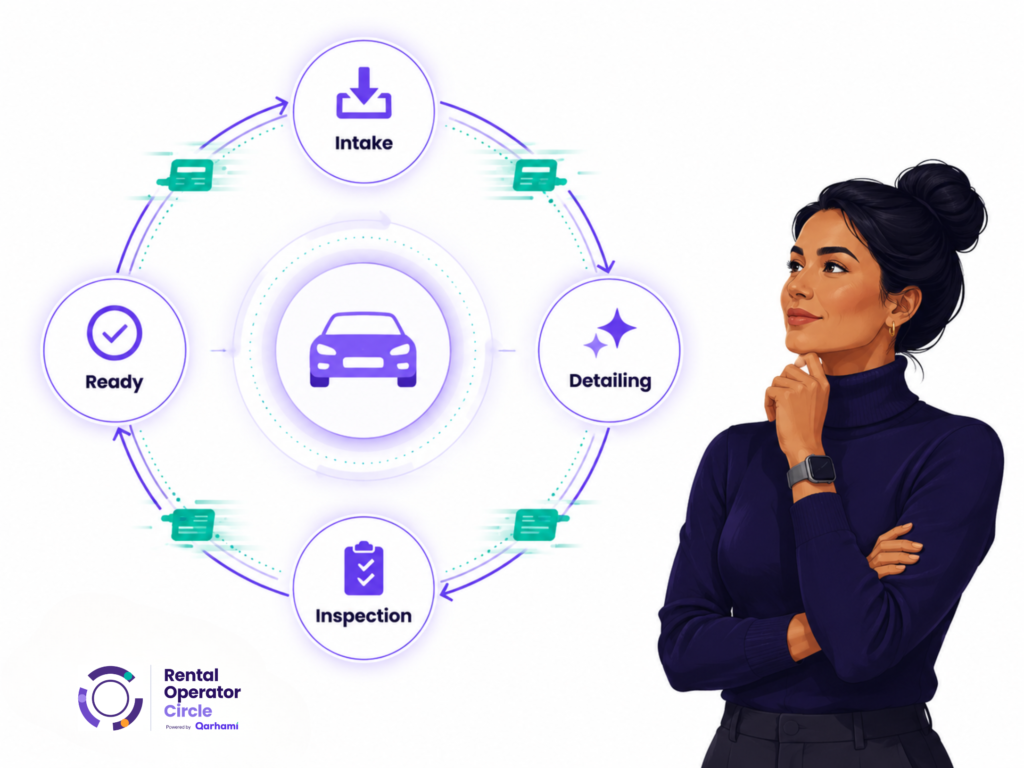
A car that is “available” on a calendar is rarely “ready” for the next guest. Readiness infrastructure must define what “ready” looks like at the system level.

  • Standardized State Tags: Every vehicle should be tagged automatically: Active, Needs Detail, Maintenance Hold, or Trip-Ready.
  • 45-Minute SOPs: Your infrastructure must include the digital workflow to track inspection photos, cleaning status, and fuel levels, ensuring the vehicle can be restaged in under an hour.

Pillar 4: The Financial Layer (Revenue Audit)

If you are manually logging tolls, mileage overages, and fuel usage into spreadsheets after a trip, you are losing money on administrative overhead.


  • Automated Exporting: Your fleet stack must ingest toll data directly from your hardware or platform integrations, allowing you to charge guests instantly.
  • Closed-Loop Records: Every repair invoice must be digitally attached to the asset profile. This builds your audit trail, which is critical if you ever need to prove the condition of your vehicle to insurance underwriters or platform support.

The Readiness-to-Inventory Ratio

A common scaling mistake is maintaining a 1:1 ratio between your time and your inventory. In this model, every new car adds a fixed, linear block of manual labor to your day.

An operator builds infrastructure to break that ratio. When you deploy a Connected Fleet Operating System, you shift toward an exponential scaling model where adding the fifth or tenth car requires significantly less incremental labor than adding the first two.

Your infrastructure checklist before you acquire any vehicle must include:

  1. Hardware Binding: Does the new car have an installed telemetry module synced to my command center?
  2. Access Protocol: Is the digital relay tested, verified, and ready for remote access?
  3. SOP Alignment: Does this car fit into my existing cleaning, detailing, and staging workflow?
  4. Data Integration: Is the vehicle’s VIN and plate already synced to my central automated toll and mileage reporting engine?

The Operator's Foundation

The hosts who build infrastructure before they buy their next car aren’t just buying more inventory; they are hardening their business against failure. They understand that by the time you realize you need a maintenance system, a lockbox-less handoff protocol, or an automated toll tracker, you have already lost money.

Serious operators know that the infrastructure for a 20-car fleet is fundamentally different from a 1-car rental model. They don’t build systems to make hosting “easier”—they build them because manual coordination at scale is physically impossible to sustain.


If you are planning your Turo business in 2026, treat the setup phase as the most important project you will ever undertake. Build the visibility, the remote control, and the automated readiness protocols first. Then, and only then, scale your fleet.

Frequently Asked Questions

It means prioritizing the setup of digital systems—like real-time telemetry, remote keyless access, and maintenance automation—before purchasing additional inventory. This ensures the business can absorb more vehicles without requiring a linear increase in manual labor.

They create “turnaround latency.” They require the operator to be physically present or coordinate complex guest logistics, which limits your ability to manage multiple cars simultaneously and increases the risk of double-bookings or lost keys.

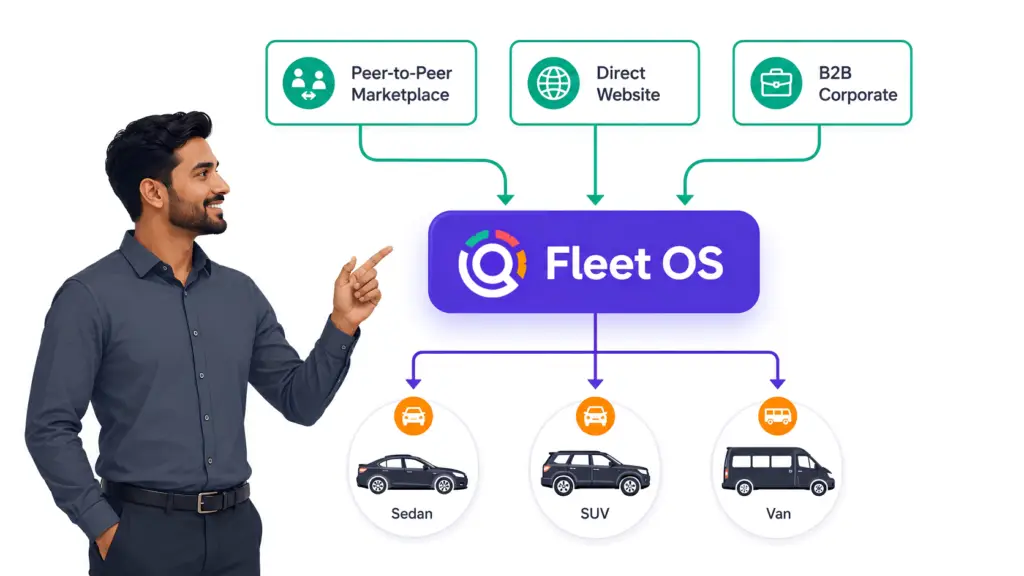
A scaled fleet requires three layers: a telemetry layer for live diagnostics and odometer tracking; an access layer for remote digital handoffs; and a central operating system (OS) dashboard to synchronize trip, maintenance, and revenue data.

You must move to a “Closed-Loop Maintenance SOP.” This requires software that tracks mileage automatically via telemetry, sends pre-trip service alerts, logs repair invoices digitally against the vehicle’s history, and forces a re-trigger for the next service interval.


Readiness Latency is the delta between a vehicle being marked “Available” on a calendar and being physically clean, fueled, and inspected. Scaling hosts must eliminate this gap by digitizing the turnaround workflow and using automated vehicle state tagging.

© 2026 Qarhami. All Rights Reserved.