The Criminal Conversion Threshold:

Differentiating Late Returns from Auto Theft

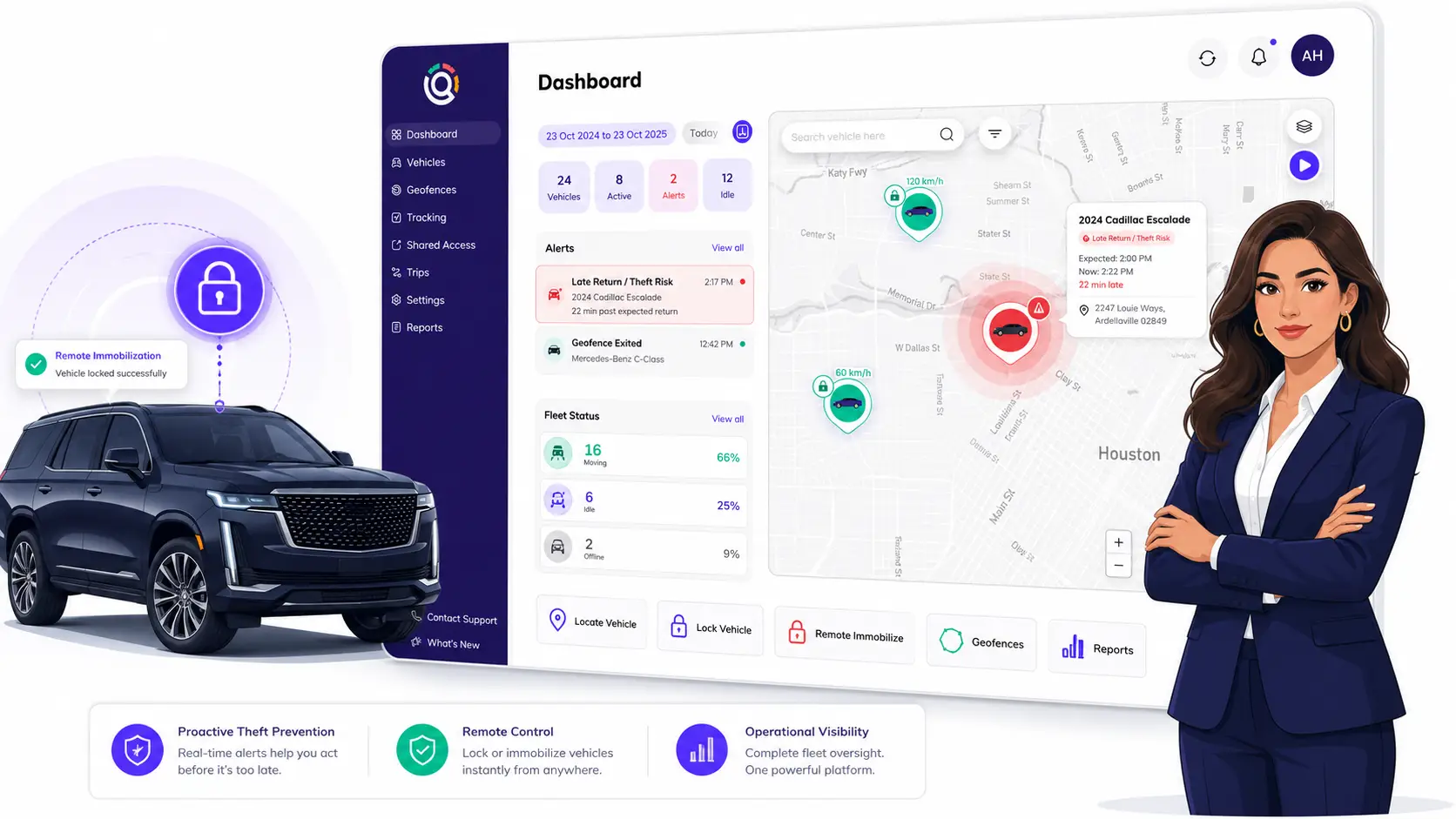
A fleet operator using a digital security dashboard to remotely track and immobilize a stolen rental vehicle.

Every fleet operator will eventually experience the physical knot in their stomach that occurs when a rental window closes, the guest stops responding to messages, and the vehicle is nowhere to be found.

At one hour past the return time, it is an annoyance. At four hours, it is a logistical headache affecting your next booking. But as the clock crosses the 12-hour, 24-hour, and 48-hour marks, you enter the most dangerous, legally ambiguous territory in the peer-to-peer car-sharing industry.

When you call the police to report the vehicle stolen, you will almost certainly be hit with a phrase that has bankrupted countless casual hosts:

“You gave them the keys. This is a breach of contract. It is a civil matter, not auto theft.”


This is the exact moment where casual hosting ends and commercial fleet operations begin. To survive in the rental industry, you must intimately understand The Criminal Conversion Threshold. You cannot rely on hope, and you cannot rely on local police dispatchers to understand the nuances of a digital rental agreement. You must build an operational infrastructure that legally proves criminal intent, secures the asset via hardware telemetry, and forces law enforcement to act.

The Legal Reality: Auto Theft vs. Criminal Conversion

To protect your fleet, you must first understand the legal distinction between a standard auto theft and the misappropriation of a rental asset.

Grand Theft Auto (GTA) typically requires the perpetrator to unlawfully gain access to a vehicle without the owner’s initial consent (e.g., smashing a window, hotwiring the ignition, or cloning a key fob from a driveway).

Criminal Conversion (often categorized under embezzlement, theft by conversion, or failure to return a rental vehicle, depending on state jurisdiction) occurs when a person legally gains possession of an asset (via a valid Turo contract or private rental agreement) but intentionally acts to deprive the owner of that asset after the legal right to possession has expired.

The legal friction stems from mens rea—the intention or knowledge of wrongdoing. When a guest fails to return a car, law enforcement initially presumes the guest simply overslept, got a flat tire, or misread their itinerary. Because you willingly handed over the keys (or the digital access token), the police classify the dispute as a civil breach of contract.


To cross the Criminal Conversion Threshold, the burden of proof is entirely on you, the operator. You must provide irrefutable, documented evidence that the guest has transitioned from “negligently late” to “intentionally stealing.”

The Financial Mechanics of a Total Loss

Understanding why this threshold matters requires looking at the brutal financial mechanics of an unrecovered asset. If a guest disappears with a $30,000 vehicle and you fail to navigate the conversion threshold properly, the financial damage compounds far beyond the value of the car.

Consider the CapEx (Capital Expenditure) margin leak model on a standard financed fleet vehicle:

L_total = (V_acv I_payout )+(R_lost × D_downtime )+F_recovery

Where:

                V_acv = Actual Cash Value of the vehicle (e.g., $30,000).

                I_payout = Insurance payout (Often $0 if the claim is denied due to a lack of a formal police report).

                R_lost = Average daily revenue (e.g., $60/day).

                D_downtime = Days the vehicle is missing or tied up in investigations (e.g., 45 days).

                F_recovery = Impound, towing, and private investigation fees (e.g., $1,200).


If police refuse to file a stolen vehicle report because they deem it a “civil matter,” your commercial insurance or platform protection plan will likely freeze the claim. You are left paying the monthly debt service on a phantom asset. A single unresolved conversion can wipe out the net profit of five other healthy vehicles for an entire fiscal year.

The 72-Hour Crisis Triage Timeline

To force action and protect your asset, you must follow a rigid, chronological triage protocol. You cannot escalate to a 911 call after 30 minutes, nor can you wait three days to begin gathering evidence.

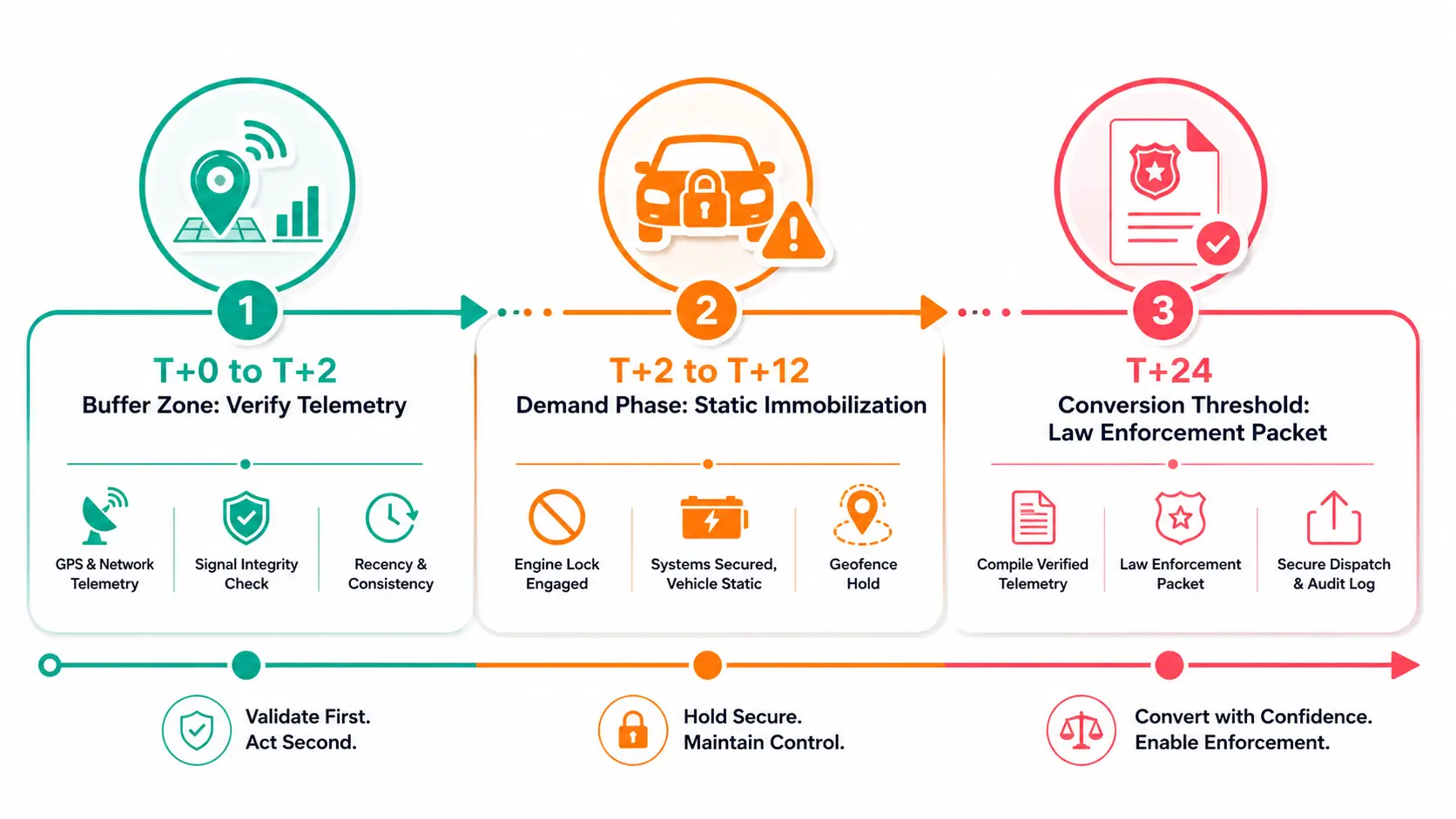
: An operational timeline showing the escalation phases of a late rental return, moving from the Buffer Zone to the Criminal Conversion Threshold.

Phase 1: The Buffer Zone (T+0 to T+2 Hours)

In the first two hours following a missed return, the situation is classified as a standard late return.


  • Action: Execute your standard asynchronous communication loop. Send a formal, platform-approved message requesting an ETA.
  • Telemetry Check: Verify the vehicle’s location via your Fleet OS. Is it moving toward the drop-off location? Is it parked at an airport terminal?
  • Error Avoidance: Do not threaten police action in this window. Threatening a guest who is simply stuck in traffic violates platform Terms of Service and degrades your professional standing.

Phase 2: The Demand for Return (T+2 to T+12 Hours)

If the guest is unresponsive and the vehicle is not moving toward the authorized drop-off zone, you transition into legal evidence gathering.

  • Action: Send the “Demand for Return” notice. This is a formal, written declaration sent via the booking platform and text message (if authorized). It must explicitly state that the rental period has expired, consent to operate the vehicle is revoked, and failure to return the asset will result in a report of auto theft.
  • Hardware Intervention: If you utilize a connected Fleet OS with remote relays, this is the window where you deploy Static Immobilization. (We will cover the mechanics of this below).

Phase 3: The Criminal Conversion Threshold (T+12 to T+24+ Hours)

At this stage, if the vehicle is disabled or abandoned, you coordinate a physical recovery. If the vehicle is actively moving and the guest has cut off communication, the threshold has been crossed. You must now compile the Law Enforcement Packet.

Constructing the Law Enforcement Packet

When you walk into a police precinct or call an officer to the scene, you cannot simply say, “My Turo guest won’t bring my car back.” You must present a structured, physical (or digital) packet that leaves the officer no choice but to classify the incident as a crime.

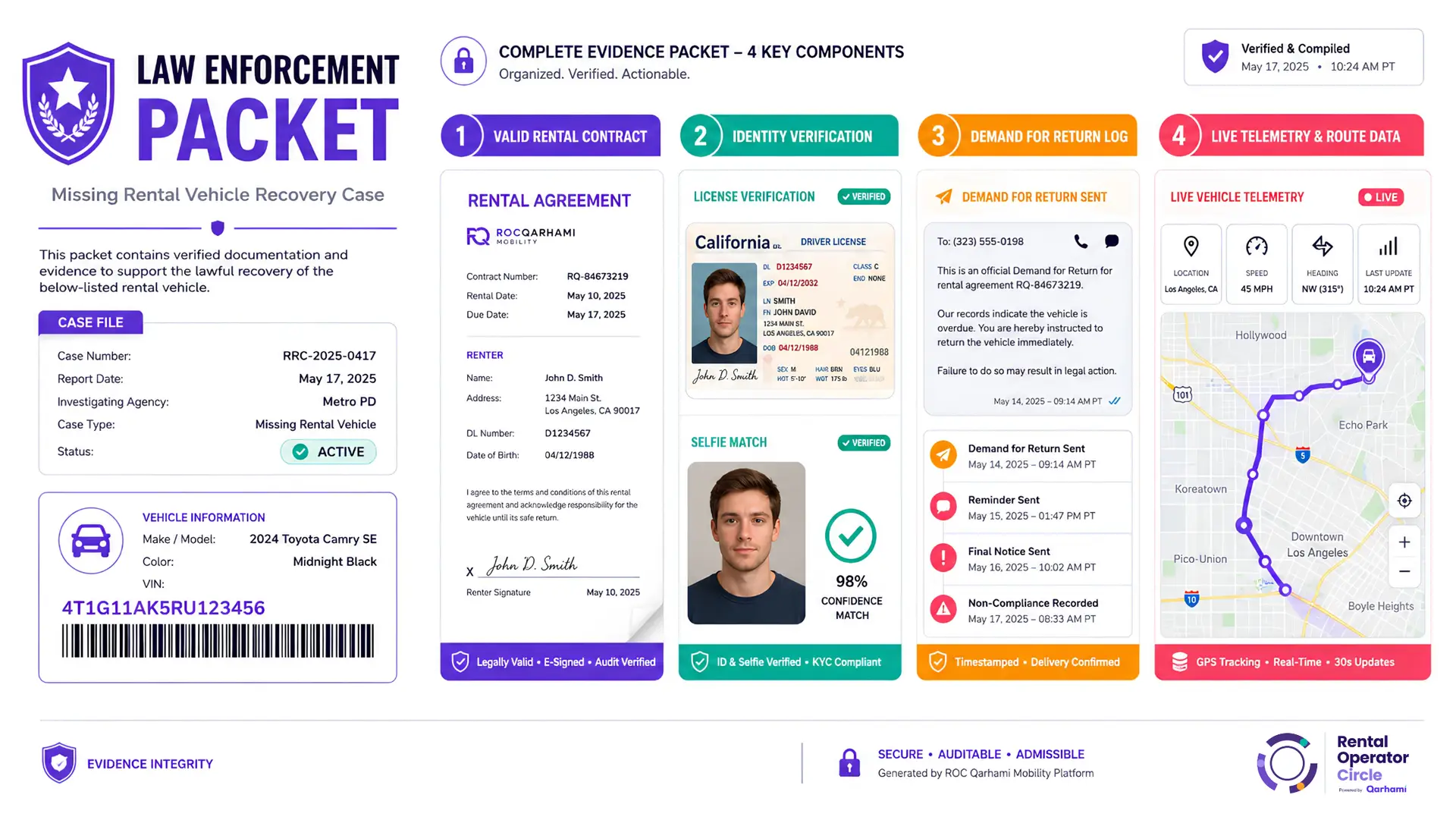
Law Enforcement Pack – The Criminal Conversion – Late return to theft report

Your Law Enforcement Packet must include:


  1. The Valid Rental Contract: Proving the exact date and time the legal right to possession ended.
  2. The Identity Verification Profile: Front and back of the guest’s driver’s license, secondary selfie verification, and booking platform ID.
  3. The Demand for Return Log: Timestamped evidence showing that you explicitly revoked consent to possess the vehicle and the guest ignored the demand.
  4. Live Telemetry Route Data: Passive GPS dots are not enough. You must provide a printed or digital map showing event-level data: where the car went after the return time, sustained speeds, or geofence breaches (e.g., crossing a state or international border without authorization).
 

When an officer sees a contract, a timestamped demand for return, and telematics proving the guest has crossed state lines while ignoring messages, the “civil matter” defense dissolves. The officer has the probable cause necessary to enter the VIN into the NCIC (National Crime Information Center) database as a stolen felony vehicle.

The Hardware-Backed Security Stack

The absolute best way to survive a criminal conversion is to ensure it is physically impossible to execute in the first place. This requires migrating away from consumer-grade GPS trackers (like AirTags or cheap plug-in dongles) and engineering a Hardware-Backed Security Stack.

1. Hardwired OBD-II & CAN Bus Integration

A thief’s first move is to look for an Apple AirTag or unplug a cheap OBD tracker. Professional fleet infrastructure requires hardwired telematics hidden deep within the dashboard, spliced directly into the vehicle’s CAN bus system. If power is cut to the primary battery, the hardware must possess an internal backup battery to continue transmitting event-level location data for physical recovery.

2. The Mechanics of Static Immobilization (Kill-Switches)

The ultimate defense against conversion is the remote immobilization relay, commonly known as a kill-switch. However, this tool must be deployed with extreme legal and operational precision to avoid massive liability.

You cannot kill the engine of a moving vehicle. Doing so could cause a fatal accident on a highway, transferring immense criminal and civil liability directly to you, the fleet operator.

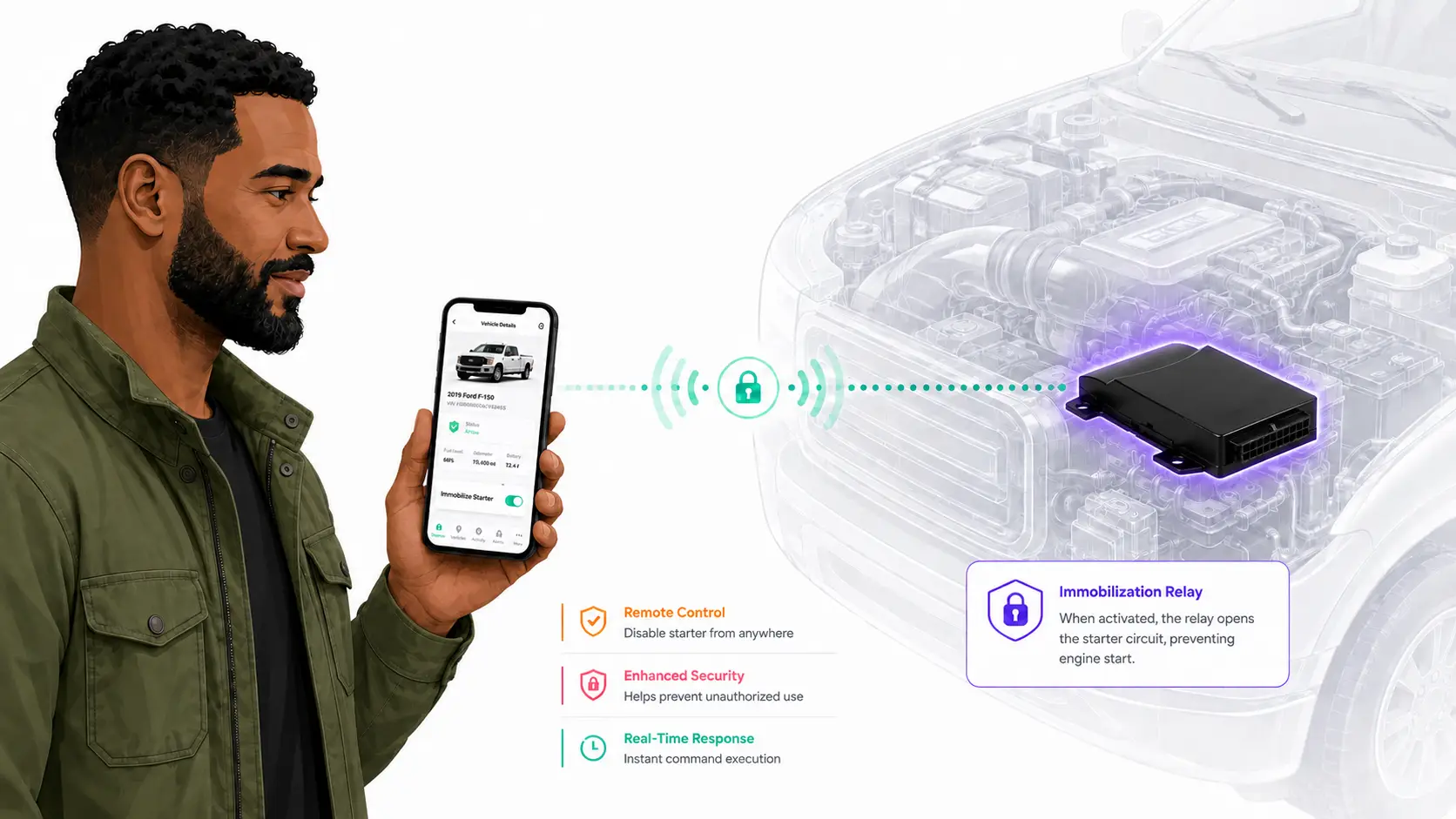
A fleet operator using a mobile app to send a static immobilization command to a rental vehicle's engine relay module.

Commercial Fleet Operating Systems execute Static Immobilization. The OS communicates with the hardware relay to interrupt the starter wire. If the guest is driving, the vehicle operates normally. However, the exact second the guest shifts into park and turns the engine off to get gas, buy food, or sleep, the relay activates. When they turn the key or press the start button again, the engine is dead. 

The asset is frozen safely in a static position. You dispatch your recovery runner or a tow truck, recover your vehicle, and eliminate the total loss scenario entirely.

3. Geofence Perimeter Triggers

Most rental contracts strictly prohibit cross-border travel (e.g., taking a vehicle from California into Mexico). Qarhami is the only OS that allows you to draw digital boundaries around permitted zones. If a guest breaches that geofence, the system automatically triggers a high-priority alert to your central command dashboard. You do not have to wait for the 72-hour return window to expire; a geofence breach is an immediate violation of terms that justifies instant static immobilization and recovery.

Moving From Hope to Absolute Control

The transition from a casual host to a commercial fleet operator requires a fundamental shift in how you view risk. A host relies on trust, platform support, and the hope that guests will do the right thing.

An operator relies on digital access tokens, hardware relays, and structured legal protocols.

When you define the Criminal Conversion Threshold internally, equip your vehicles with static immobilization hardware, and build an infrastructure that logs every message and movement, you strip the anxiety out of the rental business. You stop fighting with police dispatchers over “civil matters,” and you start commanding your fleet with absolute, unshakeable authority.

Frequently Asked Questions

A late return is a civil breach of contract where the guest is delayed but intends to return the vehicle. Criminal Conversion occurs when the legal rental window has expired, you have explicitly demanded the vehicle’s return, and the guest intentionally retains possession, effectively stealing the asset they initially rented legally.
Because the owner willingly gave the keys or access to the guest initially, law enforcement defaults to classifying it as a civil contract dispute. To get a police report, the operator must provide a Law Enforcement Packet proving criminal intent, such as a formal demand for return and telematics showing unauthorized use.

Yes, provided it is disclosed in your rental agreement and executed as a “Static Immobilization.” You must never cut power to a moving vehicle. Static immobilization safely disables the starter motor, ensuring the car cannot be restarted only after it has been safely parked and turned off by the driver.

Operators follow a rigid triage timeline. The first 2-12 hours involve verifying telemetry and issuing formal demands for return. If communication is blacked out and the vehicle is not moving toward the drop-off zone after 12-24 hours, the conversion threshold is crossed, and law enforcement escalation begins.

No. Apple AirTags are consumer-grade Bluetooth devices designed for lost keys, not stolen vehicles. They alert the thief to their presence (anti-stalking features), update slowly, and cannot execute remote lock or immobilization commands. Commercial fleets require hardwired OBD-II or CAN bus telemetry.

© 2026 Qarhami. All Rights Reserved.