The Synchronous Handoff Framework:
Managing Overlapping Check-ins Without Delays
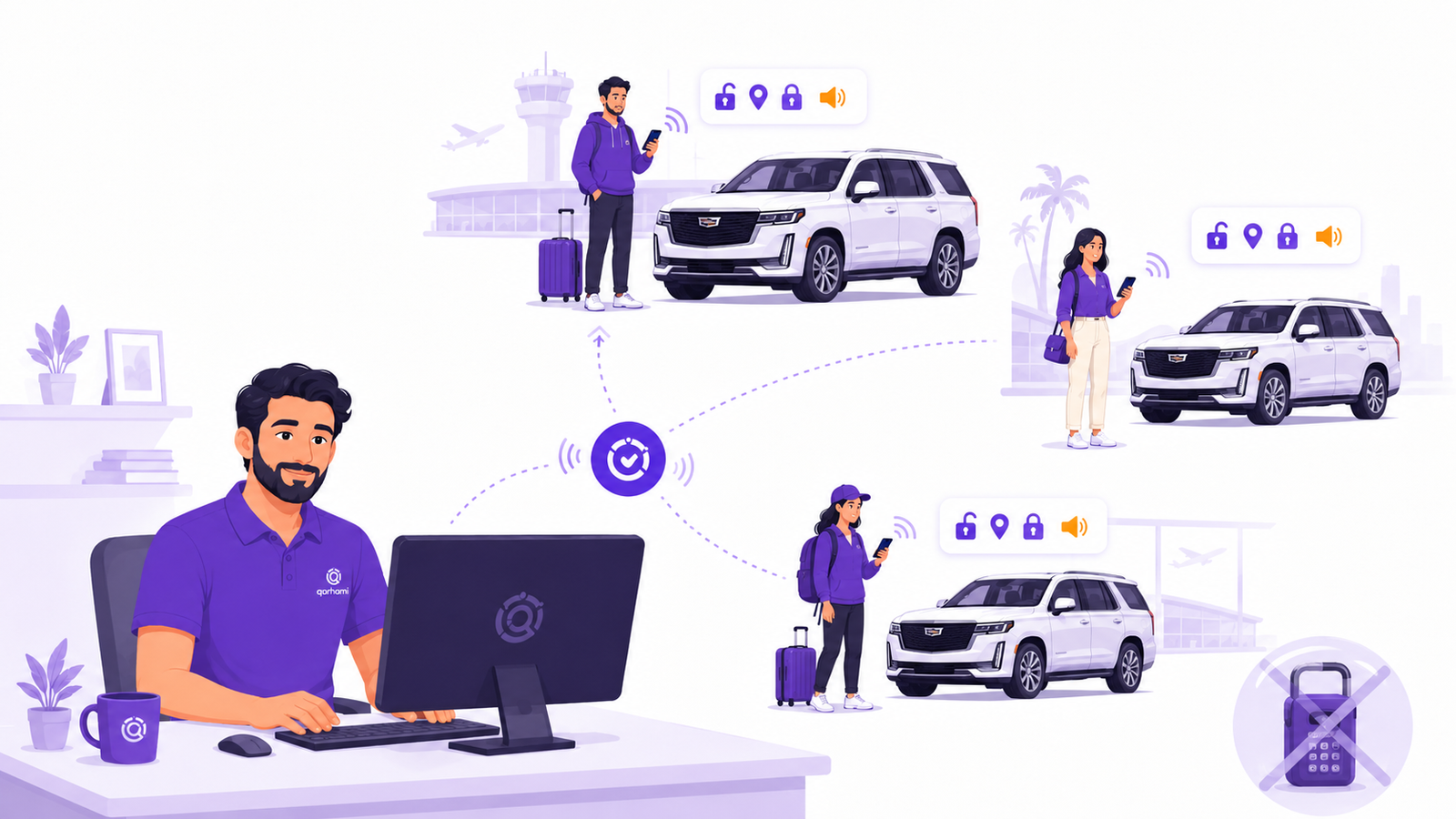
If your rental fleet is growing, you are likely intimately familiar with “The Turnaround Crunch.” It is that specific time on a Friday afternoon when your cleaning team is finishing up, your maintenance team is waiting on a part, and three different guests are landing at the airport within thirty minutes of each other.
In a manual hosting model, this is where the business breaks. You find yourself running across town, juggling physical lockbox codes, texting instructions to three different people, and desperately praying that none of your guests are running late.
When your fleet was one car, you could manage this with a sticky note and a bit of adrenaline. When your fleet is five, ten, or twenty cars, you are no longer a “host”. You are a central air traffic controller. To survive this, you must stop treating guest handovers as individual events and start treating them as a Synchronous Handoff Framework.
The Handoff Bottleneck: Why Manual Processes Fail
The goal of a high-velocity rental business is to minimize the time between a vehicle returning from one trip and departing on the next. This window is your Turnaround Latency.
If you rely on physical lockboxes, you are inherently adding friction to this process. A physical lockbox is a single point of failure. It is exposed to the elements, it is prone to mechanical jamming, and it requires you to physically manage the contents. Even worse, it requires the guest to be at the exact right spot at the exact right time, with you standing by in case they can’t figure out the combination.
When you scale, you cannot be a part of the Handoff. If you are part of the Handoff, you are the bottleneck.
The Core Elements of a Synchronous Handoff
To achieve true scale, you must architect a system where the guest experience is frictionless, and your involvement is zero. This requires three distinct technical layers working in harmony:
1. Time-Bound Digital Authorization
The old way of hosting involves texting a static lockbox code to a guest the morning of the trip. If that guest cancels, or if they decide to show up early, your security is compromised.
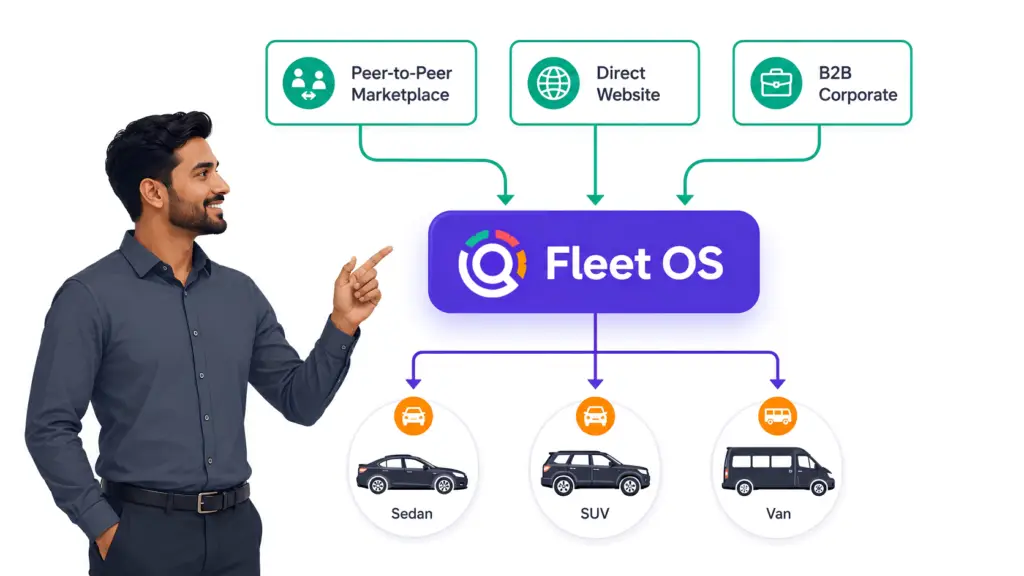
In a synchronous framework, you deploy Time-Bound Digital Access Tokens. These are encrypted signals sent from your Fleet OS directly to the vehicle’s onboard relay. They are only authorized to function during the window defined in your rental contract. If a guest arrives early, the system denies the command. If a guest tries to access the car after the trip, the system denies the command. You are not managing codes; you are managing a secure, time-sensitive gateway.
2. The Status-Driven Queue
How do you know if a vehicle is ready for a synchronous handoff? You must move beyond calendar-based availability.
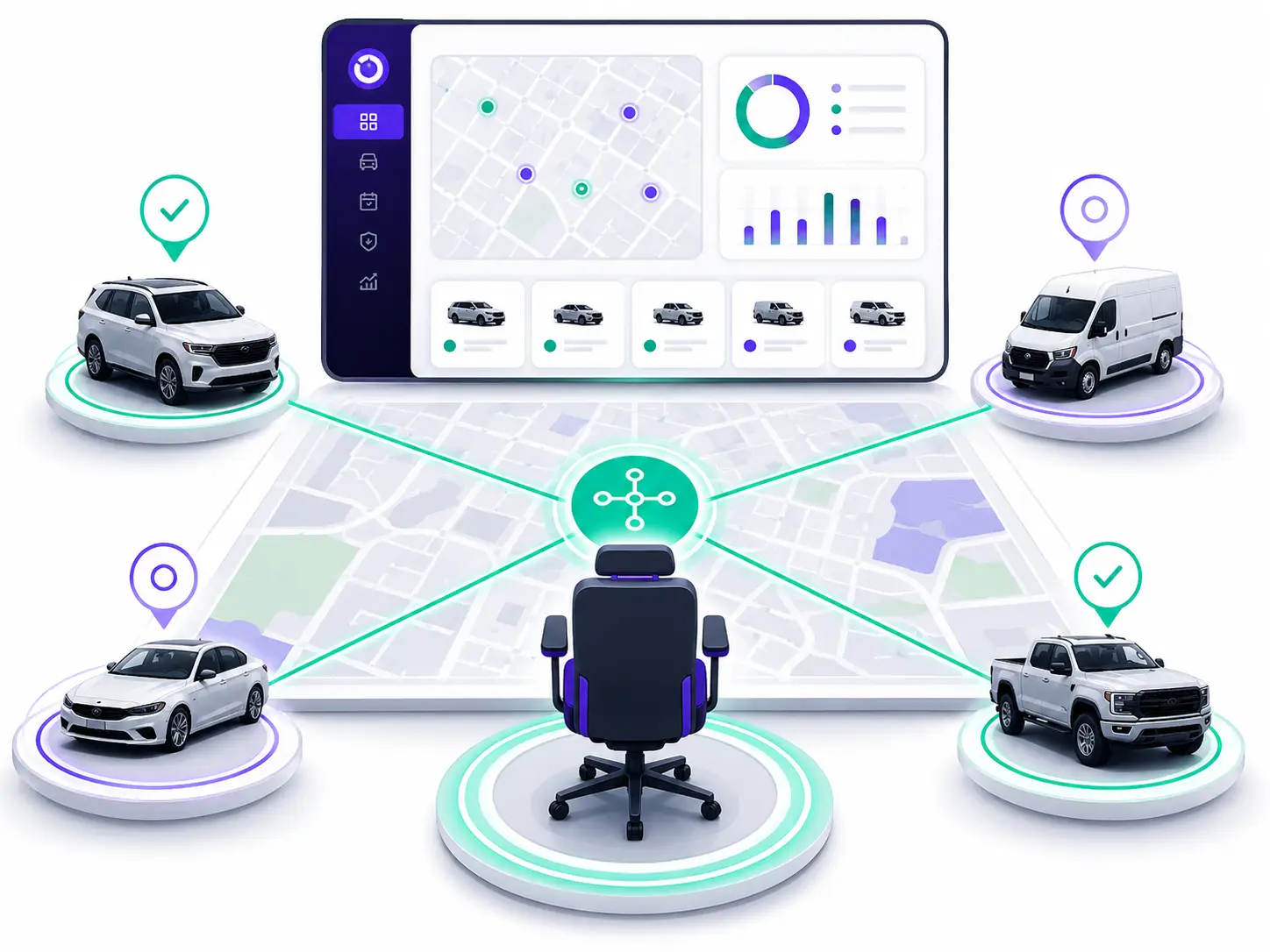
A vehicle marked “Available” on a platform calendar is not the same as a vehicle marked “Trip-Ready” in your internal infrastructure. Your Handoff Framework must rely on Automated State Tags. As soon as a car is checked in, cleaned, and inspected, your runner or detailing team updates the status tag to “Trip-Ready.” The Handoff Framework only allows a guest to receive their unlock token if this tag is active. This eliminates the catastrophic error of a guest unlocking a car that hasn’t been cleaned or fueled.
3. The Asynchronous Communication Loop
The most common cause of handover delays is guest confusion. They don’t know where to park, they don’t know how to unlock the vehicle, and they don’t know what to do if they encounter an issue.
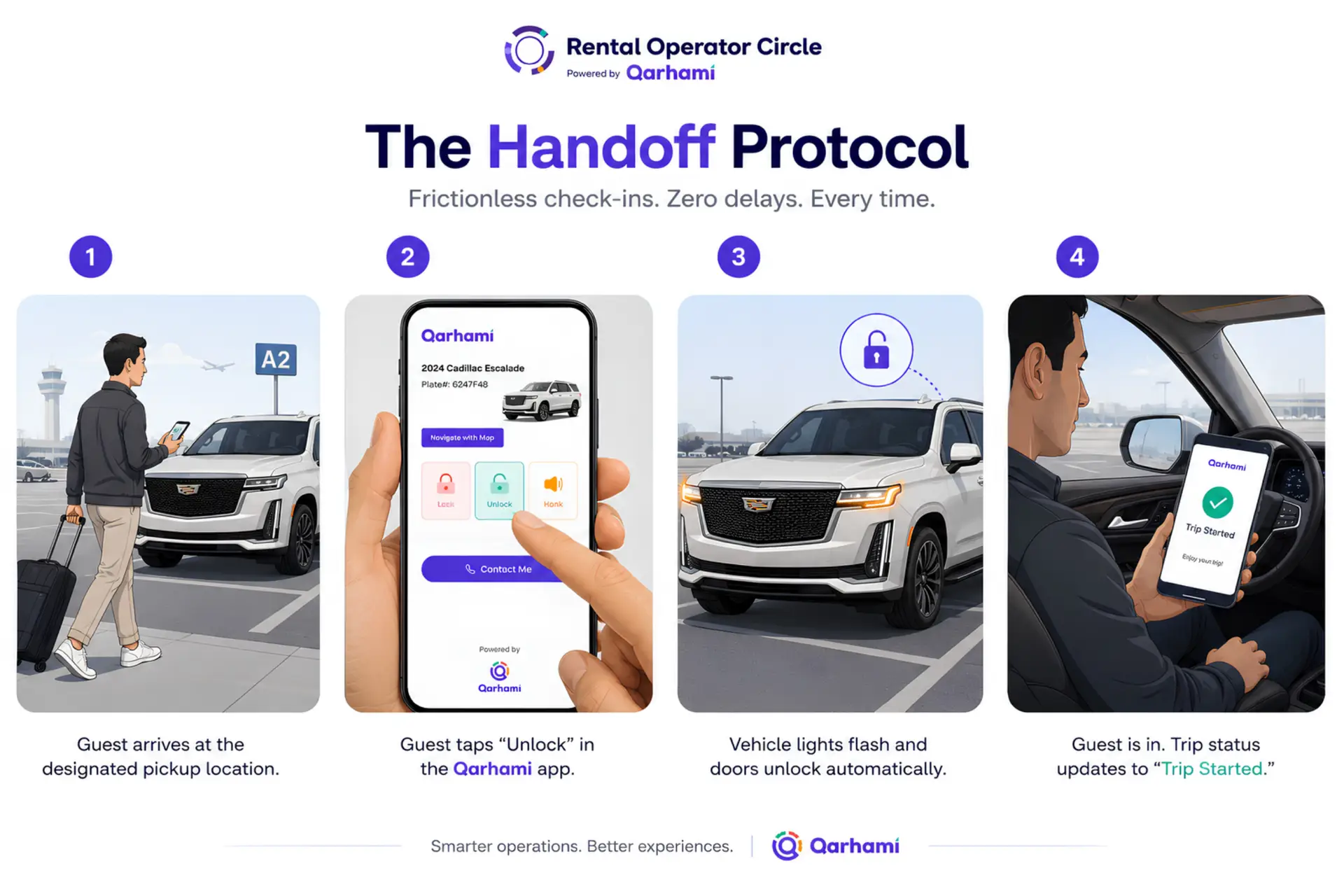
You must automate the communication loop. When a guest arrives at the location, the system should push a notification: “Your vehicle is ready. Tap here to unlock.” This action, integrated with the vehicle’s remote relay, creates a seamless transition that requires zero human intervention from you, the operator.
Engineering the Turnaround
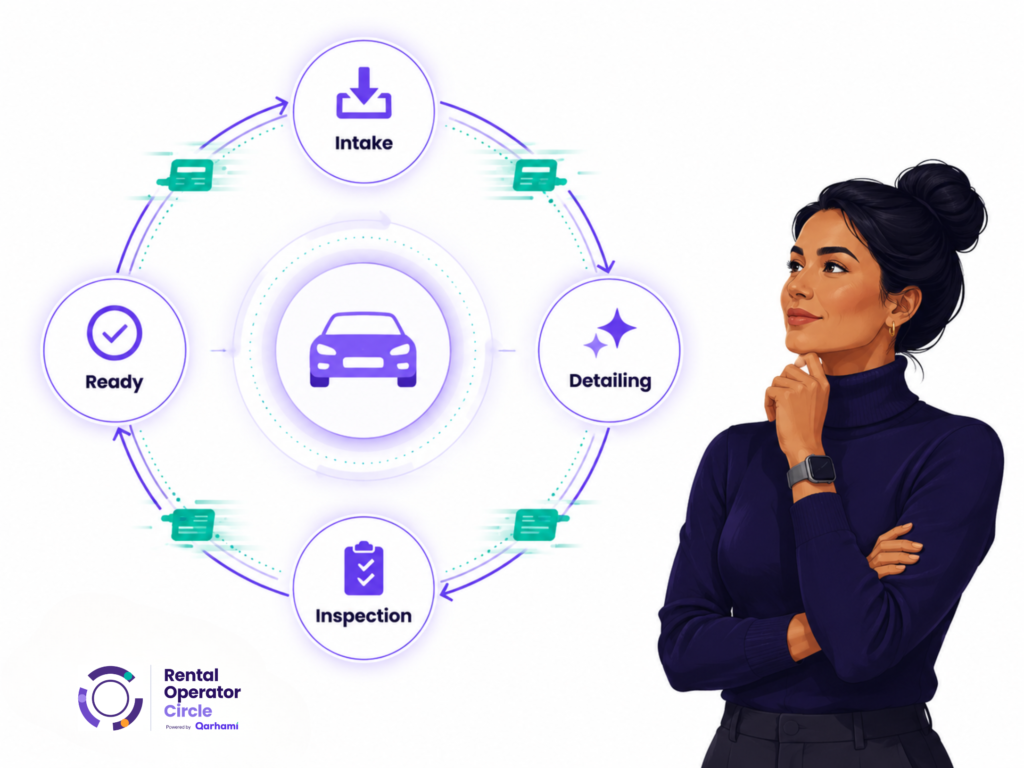
A synchronous handover is the output of a successful turnaround. If your team cannot reset a vehicle in under 45 minutes, you will inevitably have overlapping booking conflicts that no amount of software can fix.
The Handoff Framework is predicated on the 45-Minute Turnaround SOP:
- 0-5 Minutes: Asset intake, exterior inspection, and automated fuel/mileage log capture via telemetry.
- 5-30 Minutes: Interior sanitization and readiness audit.
- 30-40 Minutes: Digital state-tag update to “Trip-Ready.”
- 40-45 Minutes: Final system check and remote relay authorization.
If a vehicle is not processed within this window, the Handoff Framework must automatically flag the asset to your central command dashboard. You can then make an informed, data-backed decision: do you move the guest to a different vehicle, or do you delay the trip? You stop guessing, and you start making executive decisions.
Why "Sync" is the Future of Fleet
The “Sync” in Synchronous Handoffs refers to the alignment of your fleet availability with your physical operations.
When your Fleet OS is synced with your physical hardware (the relays and the telemetry), you eliminate the Human Buffer. You no longer need to be the middleman. You don’t need to be present at the airport or the staging lot. You don’t need to be checking your phone every five minutes to see if the guest arrived safely.
The framework handles the coordination. You handle the business.
This is the bridge between a “host” and an “operator.” A host is defined by their presence. An operator is defined by their absence. The more successful your fleet becomes, the less time you should be spending in the parking garage and the more time you should be spending optimizing your fleet’s utilization and profitability.
Frequently Asked Questions
What is "Turnaround Latency" in a rental business?
Turnaround Latency is the time interval between a vehicle’s return from one trip and its readiness for the next. Minimizing this latency is critical for scaling, as it allows for higher utilization rates and reduces the risk of back-to-back booking overlaps.
How does a synchronous handover eliminate the need for physical keys?
It utilizes remote access relays integrated with the vehicle’s CAN bus system. This allows the Fleet OS to grant a guest secure, time-bound access to the vehicle, which they unlock directly via their smartphone, completely bypassing the need for physical keys or lockboxes.
What is the purpose of an "Automated State Tag"?
An automated state tag (like Trip-Ready or Maintenance Hold) provides real-time visibility into whether a vehicle is truly prepared for a guest. It prevents the operational disaster of a guest unlocking a vehicle that has not yet been cleaned or fueled.
How do I handle a guest who arrives early for a synchronous handover?
With an integrated system, you simply set the access token to only authorize during the defined rental window. If the guest arrives early, the unlock relay command will remain disabled until the system-defined start time, ensuring your security boundaries remain intact.
Can I manage synchronous handovers without a Fleet OS?
Technically, you could try to manage it with calendar invites and static codes, but it is not scalable. True synchronous handovers require the ability to link a rental contract to a digital access token, which can only be reliably managed through an integrated Fleet OS, like Qarhami..