The-Lean-Turnaround-SOP: 45-Minute Interior Sanitization and Mechanical Verification

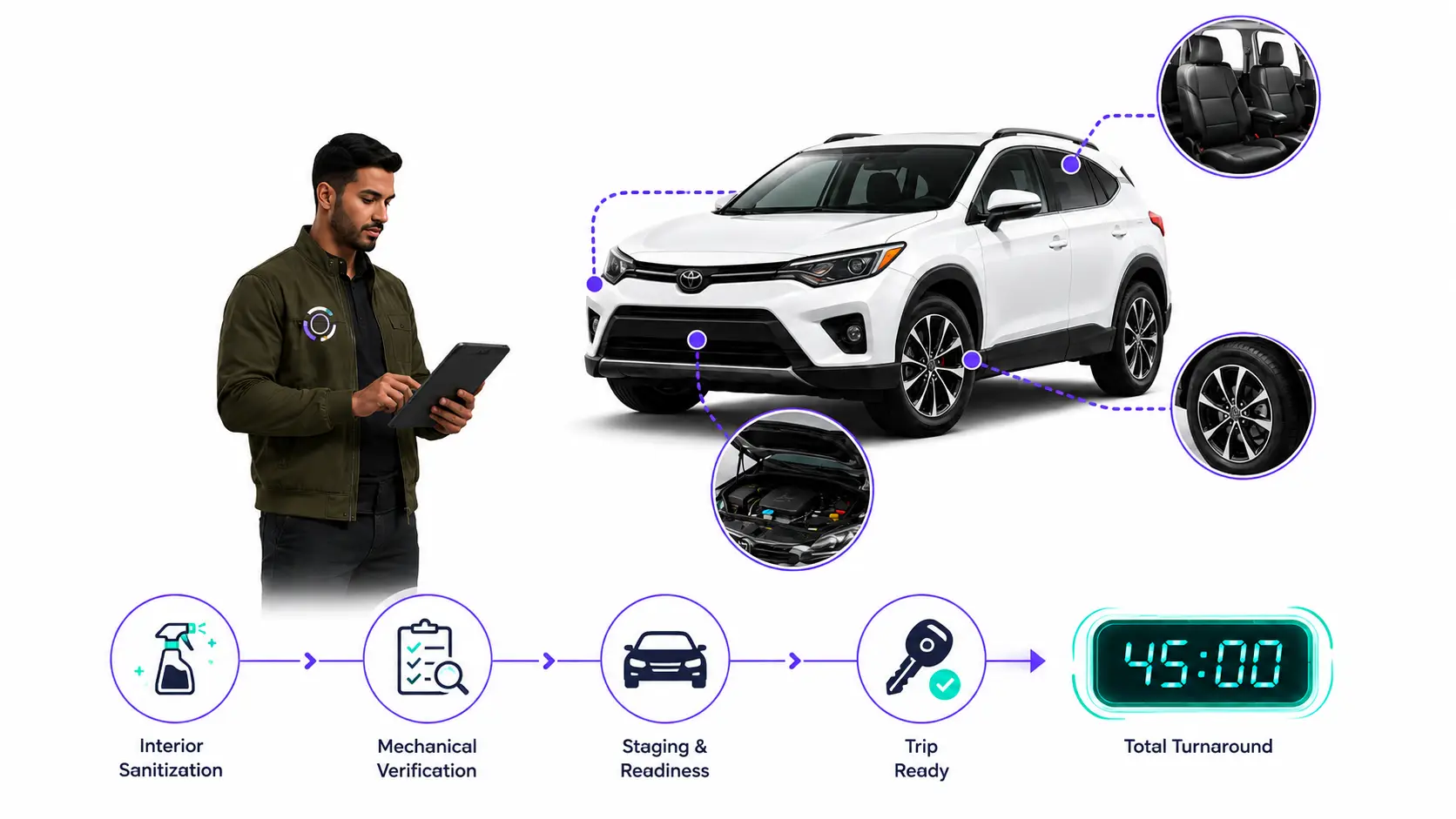
A fleet operator managing a 45-minute turnaround SOP on a rental vehicle using a digital checklist.

There is a stark difference between the theory of peer-to-peer car sharing and the physical, exhausting reality of the driveway.

In theory, you list a car, someone books it, and you collect a direct deposit. In reality, you are standing in a parking lot at 11:30 PM, vacuuming beach sand out of floor mats, trying to neutralize the faint smell of weed, and rushing to capture 25 pre-trip photos before your next guest arrives at midnight.

If you do not have a rigid, unforgiving system for your vehicle turnarounds, the manual labor will eventually break you. A host without a system easily spends 90 minutes to two hours turning over a single car. If you have three cars returning on a Sunday afternoon with back-to-back overlaps, a two-hour turnaround per car means a total operational collapse. Guests wait. Cars go out dirty. Crucial damage photos are skipped.

And on Turo, a skipped pre-trip photo is a financial death sentence. If your guest scrapes a rim or tears a seat and you missed that specific angle in your 24-hour pre-trip window, your damage claim will be denied. You just paid a $400 repair out of pocket because you were rushing to vacuum a trunk.

To survive multi-car hosting and scale into a private rental operation, you must treat your staging lot like a Formula 1 pit lane. You need The Lean Turnaround SOP.


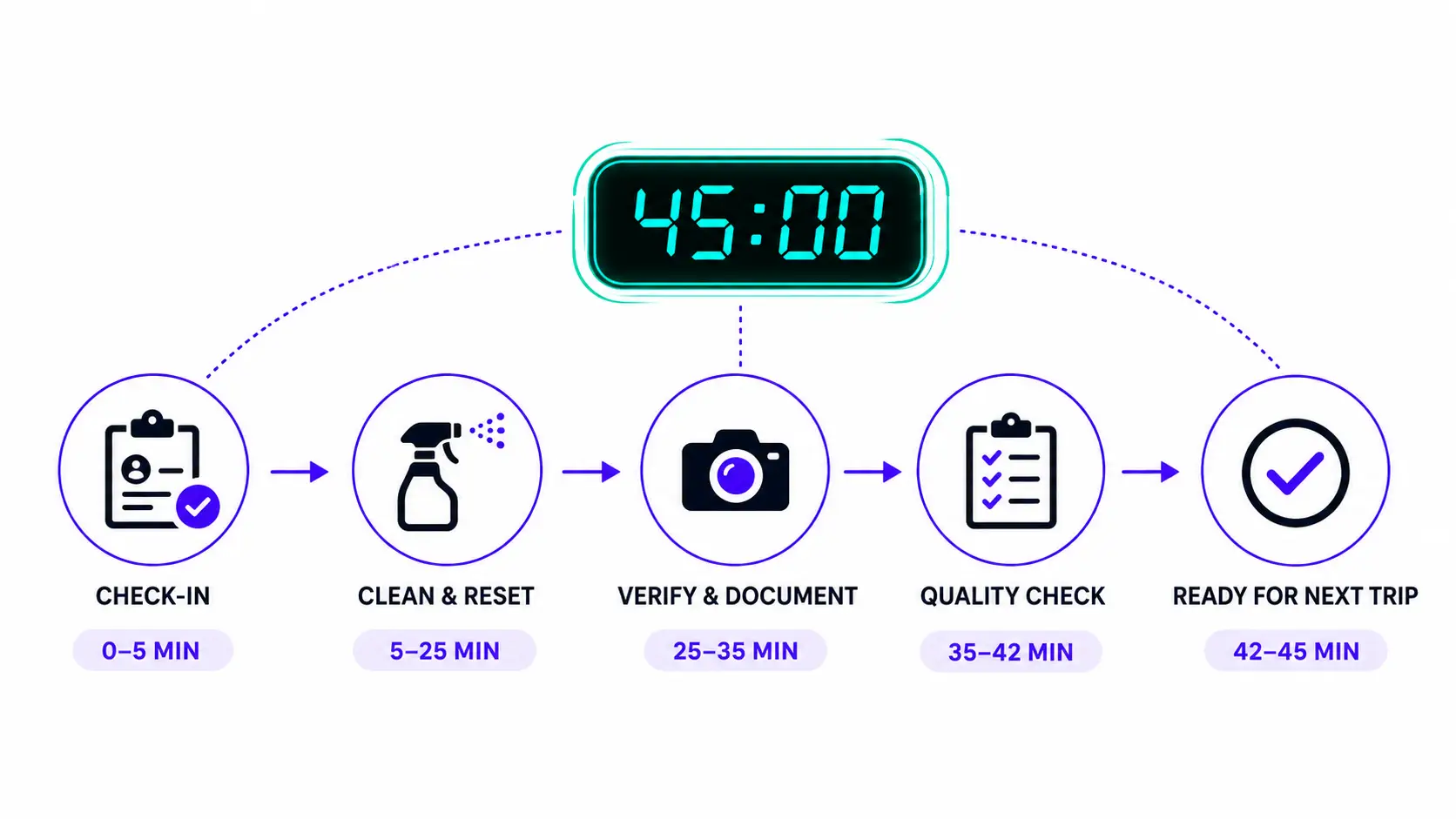
The industry standard for commercial fleet turnaround is exactly 45 minutes. This window encompasses intake, exterior wash, interior sanitization, Turo-compliant photography, mechanical verification, and digital state-tag updating. Here is the exact blueprint to achieve pit-crew efficiency without sacrificing quality or insurance compliance.

The Cost of Turnaround Latency

Why 45 minutes? Because in the rental business, speed directly correlates to utilization, and accuracy directly correlates to asset protection.

If your turnaround takes 90 minutes, you must pad your booking calendars with massive buffer windows to avoid overlapping collisions. If you require a 3-hour buffer between every Turo trip to accommodate your slow cleaning process, you are artificially restricting your vehicle’s availability. Over a year, those forced buffer blocks add up to weeks of unbookable downtime.

Conversely, private rental clients—who pay a premium to bypass the traditional rental counter—expect pristine conditions instantly. A private VIP client arriving from an airport transfer will not accept a rushed, damp interior or a “Turo special” (a car that looks clean but smells like a cheap air freshener masking cigarette smoke).


You must execute with speed for Turo volume, and with meticulous precision for private client retention.

Phase 1: Intake and Triage (0 to 5 Minutes)

The turnaround begins the exact second the vehicle breaches your home geofence. The goal of the intake phase is not to clean; the goal is to diagnose. You must instantly determine if the car is capable of being turned around, or if it must be grounded.

1. The Hardware Telemetry Sync: In a manual workflow, the host gets in the car, turns the key, checks the fuel gauge, and writes down the odometer reading to compare it against the Turo post-trip requirement. In a Lean SOP, this is automated. Your Fleet Operating System pulls the OBD-II telemetry directly. Within seconds, your dashboard logs the exact fuel percentage and exact mileage, auto-flagging any overages for your reimbursement invoices.

2. The 360-Degree Damage Sweep: Walk the perimeter of the car specifically looking for new damage. Do not focus on dirt. Look for structural issues: cracked glass, scraped alloy wheels, and bumper gouges.

  • The Turo Rule: If you spot damage, you must capture post-trip photos before you wash the car to prove the condition at the exact time of drop-off.
  • The Triage Decision: If the damage compromises safety or violates platform terms, the 45-minute timer stops. The vehicle state is shifted to “Maintenance Hold,” the upcoming guest is swapped to a different asset, and the repair loop begins.


If the car is mechanically sound and cosmetically acceptable, the timer continues.

Phase 2: The Exterior Reset (5 to 15 Minutes)

You have exactly 10 minutes to reset the exterior.

If you are hand-washing cars in your driveway using a garden hose and a single bucket, you will never achieve a 45-minute turnaround. Hand-washing is for hobbyists, not fleet operators.

The Scalable Solutions:

  1. The Unlimited Tunnel Wash: The most efficient operators negotiate commercial rates or buy unlimited monthly passes at high-quality, touchless, or soft-touch tunnel washes located within 2 miles of their staging lot. The exterior is washed and blown dry in 4 minutes.
  2. The Waterless / Rinseless Wash: If you must wash on-site, deploy a rinseless wash system (e.g., Optimum No Rinse). Using the multi-microfiber towel method, one runner can wipe down and dry an entire sedan in under 8 minutes without ever using a hose.


The Critical Details: Do not waste time waxing. Focus on the two areas guests (and Turo claim adjusters) notice immediately: the glass and the wheels. Wipe the brake dust off the rims and ensure the windshield is streak-free.

Phase 3: Interior Sanitization & Scent Control (15 to 35 Minutes)

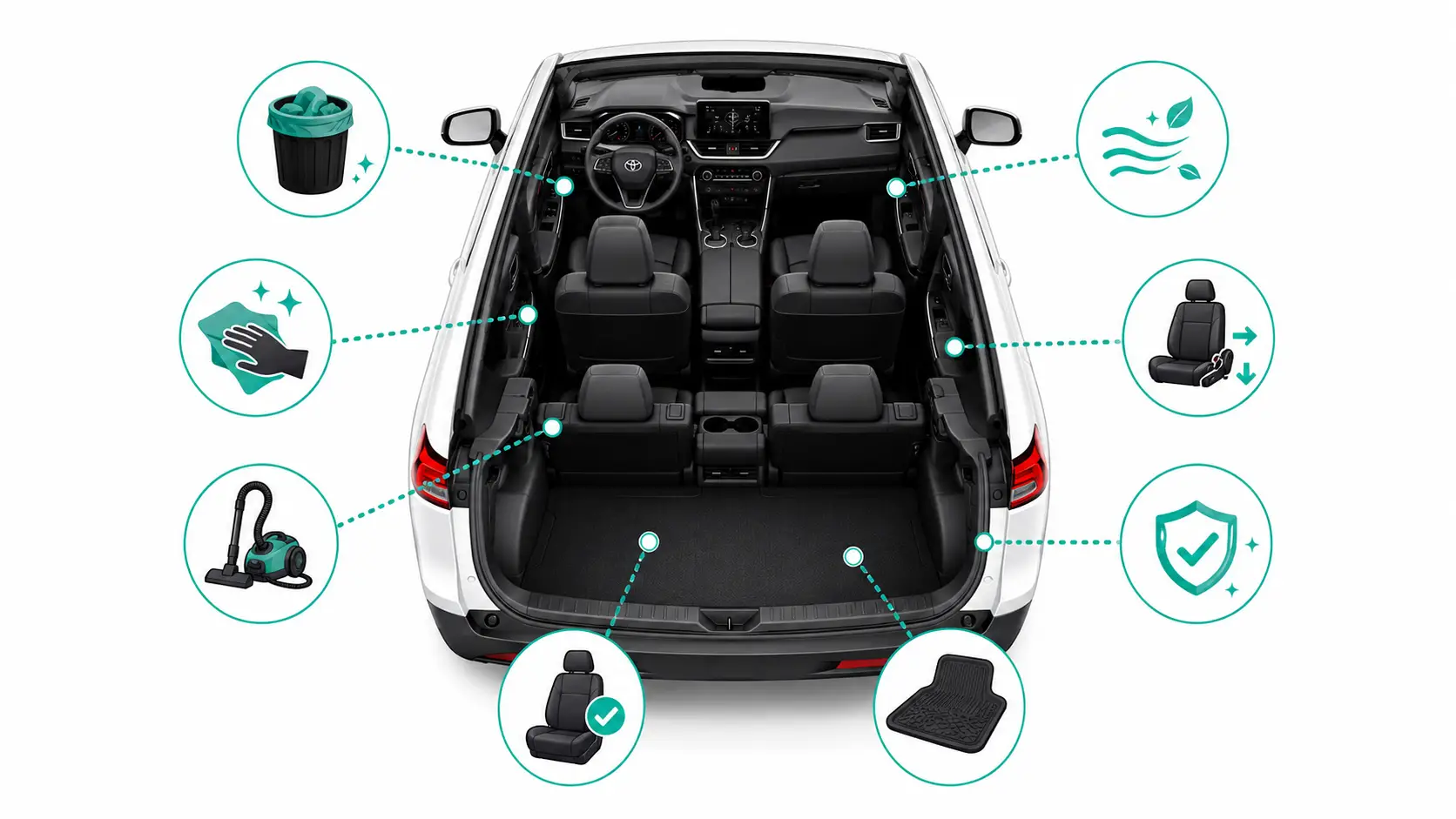
vehicle interior showing the highly efficient, grid-based vacuuming and sanitization path used by professional fleet detailers.

The interior is where hosts lose the most time, and where private clients judge the quality of your brand. You have 20 minutes to reset the cabin.

1. The Top-Down Purge: Never start by vacuuming. Start at the top. Remove all guest trash, check the glovebox, the center console, and the sunglass holder.

2. The High-Contact Wipe Down: Use a dedicated interior cleaner and a clean microfiber towel. You are not detailing a show car; you are sanitizing a rental asset. Rapidly wipe the steering wheel, gear shifter, door handles, turn signal stalks, and the infotainment screen. These are the physical touchpoints that communicate cleanliness to a guest’s subconscious.

3. The Grid Vacuum Method: Hosts lose massive amounts of time randomly vacuuming spots they already hit. Use a rigid grid pattern. Start at the driver’s front, move to the passenger front, then driver rear, passenger rear, and finally the trunk. Pull the floor mats out and smack them against a wall to dislodge embedded sand before vacuuming them—this saves you five minutes of scrubbing with a brush attachment.


4. The Scent Protocol (The Turo Special): Odor is the number one complaint in peer-to-peer car sharing. If a guest smokes marijuana or cigarettes in the car, Turo requires specific photo evidence (ashes, physical paraphernalia) to approve a cleaning fee. If you only smell it, you cannot charge for it. To neutralize an odor fast without soaking the car in cheap, overpowering chemical sprays (which private clients hate), use an ozone generator. A 10-minute ozone shock treatment while you are doing the exterior wash will kill the biological smell. Follow up with a neutral, high-end enzymatic spray.

Phase 4: Mechanical Verification & Evidence Photography (35 to 45 Minutes)

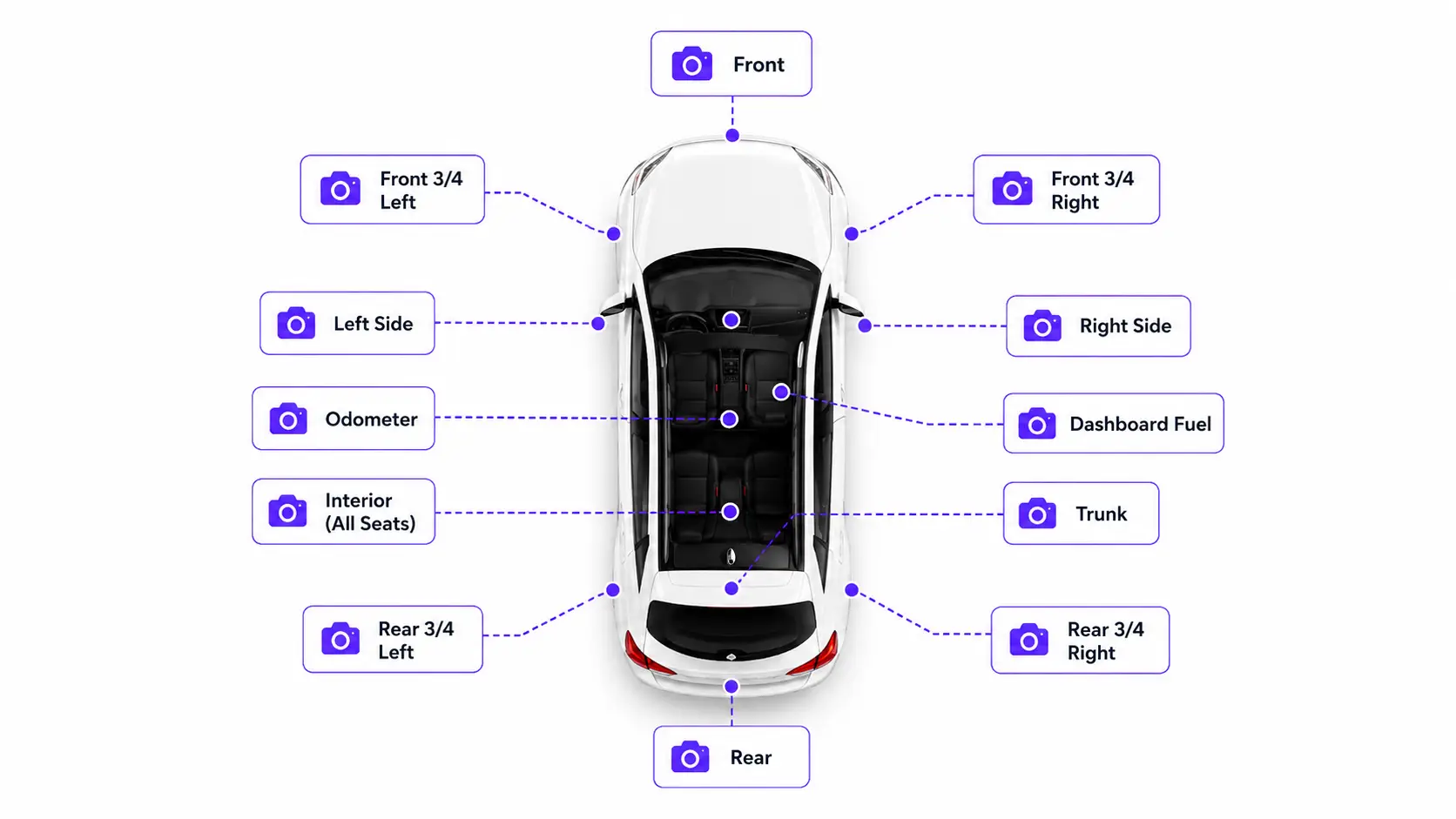
Diagram showing the right photo angles for Turo Hosts to capture before vehicle hand-off

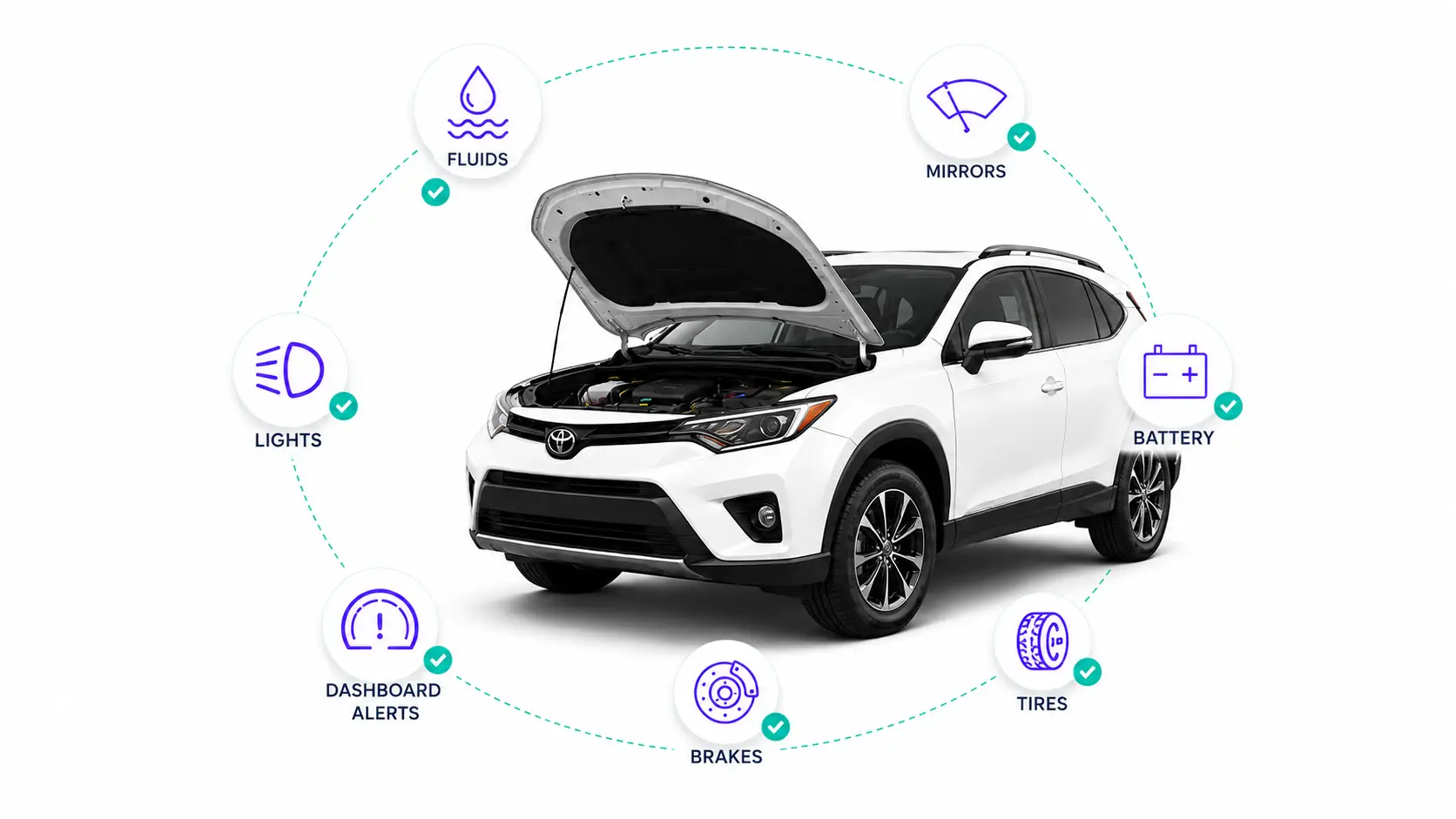
The car is clean. Now, you must secure your legal and financial liabilities. You have 10 minutes to prove the car is safe to drive and capture your pre-trip evidence.

1. The Fluid and Safety Check: Pop the hood. This is not a full mechanic’s inspection, but a rapid safety audit.

  • Check the windshield washer fluid (a dry reservoir is a massive annoyance for guests).
  • Check the tire pressures. A tire that is 10 PSI low might look fine visually, but it will trigger a dashboard warning light mid-trip, causing a frantic phone call from the guest.

2. The Turo-Compliant Photo Protocol: This is the most critical step of the entire turnaround. Turo operates on the burden of proof. If a guest returns the car with a massive dent in the rear bumper, Turo will ask you for the pre-trip photo of that exact bumper taken within 24 hours of the trip start. If your photo is blurry, taken in the dark, or cropped too tightly, the claim is denied.

You must memorize and execute a rapid, 25-point photo sweep:

  • Exterior: 8 wide angles (Front, Back, Left, Right, and 4 corners).
  • Details: 4 close-ups of each individual wheel/rim (this is the most commonly damaged item). 4 close-ups of the lower bumpers.
  • Interior: Dashboard showing the odometer and fuel gauge powered on. Driver seat, passenger seat, rear seats, and trunk.
  • Overhead: The roof and windshield glass.


When you practice this sweep, you can capture all 25 perfectly framed, well-lit photos in exactly 3 minutes. 

The Role of the Fleet OS in the Pit Stop

If you review the 45-minute SOP, you will notice a distinct lack of administrative data entry.

You are not logging into a spreadsheet to type the odometer reading. You are not writing down the fuel level on a clipboard. You are not messaging the guest to tell them the car is ready.

Why? Because the administrative burden has been completely outsourced to the Fleet Operating System. The software pulls the telemetry, logs the data, and updates the vehicle state. When you finish the 25-point photo sweep, you simply tap “Trip-Ready” on your mobile dashboard. The OS registers the status change and automatically arms the digital access token for the incoming guest.


The operator’s physical energy is spent entirely on the physical asset. The software handles the logic.

Evolving from Driveway to Commercial Lot

The 45-Minute Lean Turnaround SOP is the bridge between a casual host and a commercial fleet operator.

When you can consistently reset a vehicle in under an hour, you unlock the ability to stack bookings tightly. You maximize your asset’s utilization, allowing your vehicles to earn revenue rather than sitting in artificial cleaning buffers. You insulate your business from denied Turo claims by treating evidence photography as a rigid system, not an afterthought. And most importantly, you produce a pristine, high-quality vehicle that satisfies both budget-conscious marketplace renters and high-paying private clients.

Stop cleaning cars like it is a weekend chore. Treat your staging lot like a commercial pit lane, execute the SOP, and reclaim your time.

Frequently Asked Questions

A rapid, 45-minute turnaround minimizes “Turnaround Latency.” It allows hosts to confidently accept back-to-back bookings with minimal buffer time, maximizing the vehicle’s monthly utilization and top-line revenue, while ensuring the car is pristine for the next guest.

The most scalable method for fleet operators is utilizing unlimited monthly subscriptions at commercial tunnel washes located near their staging lot. If washing on-site is required, deploying a rinseless wash method (like Optimum No Rinse) using multiple microfiber towels is significantly faster than traditional hose-and-bucket methods.

Turo requires explicit physical evidence of a smoking violation to approve a cleaning fee. Smell alone is not enough. During your interior turnaround, you must photograph physical ash, burn marks, or discarded paraphernalia. To neutralize the odor quickly, operators use a 10-minute ozone generator shock treatment followed by an enzymatic spray.

To win a physical damage claim, you must provide clear, well-lit pre-trip photos taken within 24 hours of the trip start. The 25-point protocol includes 8 wide exterior angles, 4 close-ups of each wheel rim, lower bumpers, windshield glass, all interior seats, and the powered-on dashboard showing mileage and fuel.

A Fleet Operating System eliminates the administrative data entry of a turnaround. By using hardwired telemetry, the OS automatically logs the post-trip fuel level and odometer reading, calculates overage invoices, and automatically arms the digital access token for the next guest once the car is marked “Trip-Ready.”

© 2026 Qarhami. All Rights Reserved.